
The names of the days of the week are among the first words English learners get to learn, but probably few ever wonder about their origins and actual meaning. In this post we’ll delve into the etymology of this segment of vocabulary, with a little help from cultural history and mythology.
First off, the introduction of the seven-day week was an incredibly complicated process that took many centuries – millennia, actually. First recorded among the ancient Sumerians about 4000 years ago, it slowly spread around the Mediterranean until it was finally adopted by the Greeks and Romans in late antiquity, at least to some extent. Many modern European languages, Romance in particular, simply follow the Latin nomenclature, where each day is named after a Roman god or goddess (i.e. a celestial body connected with them). The same system has largely been kept in Germanic languages, English included, where the Roman deities have been replaced with Germanic ones with similar attributes (a process known as interpretatio germanica). So, let’s unpack the English weekday names and see what – or, rather, who – is behind them.
MONDAY
You might have guessed that the Mon- in Monday stems from the word moon, which corresponds with the Latin term for this day: dies Lunae – the day of Luna (Luna being the Roman goddess of the Moon). Eventually, the Saxon word Monandæg evolved into the modern English Monday. If you are familiar with some of the Romance languages, you will easily recognise Luna in the French word lundi, Spanish lunes or Italian lunedì.
TUESDAY
This one might not be as obvious, but the Tue- in Tuesday goes back to the Anglo-Saxon god of war known as Tiw (elsewhere known as Týr), giving us the Old English word for Tuesday: Tiwesdæg. This corresponds with Latin dies Martis, the day of Mars, which you will recognise in many of the Romance languages: mercredi in French, martes in Spanish, marţi in Romanian.
WEDNESDAY
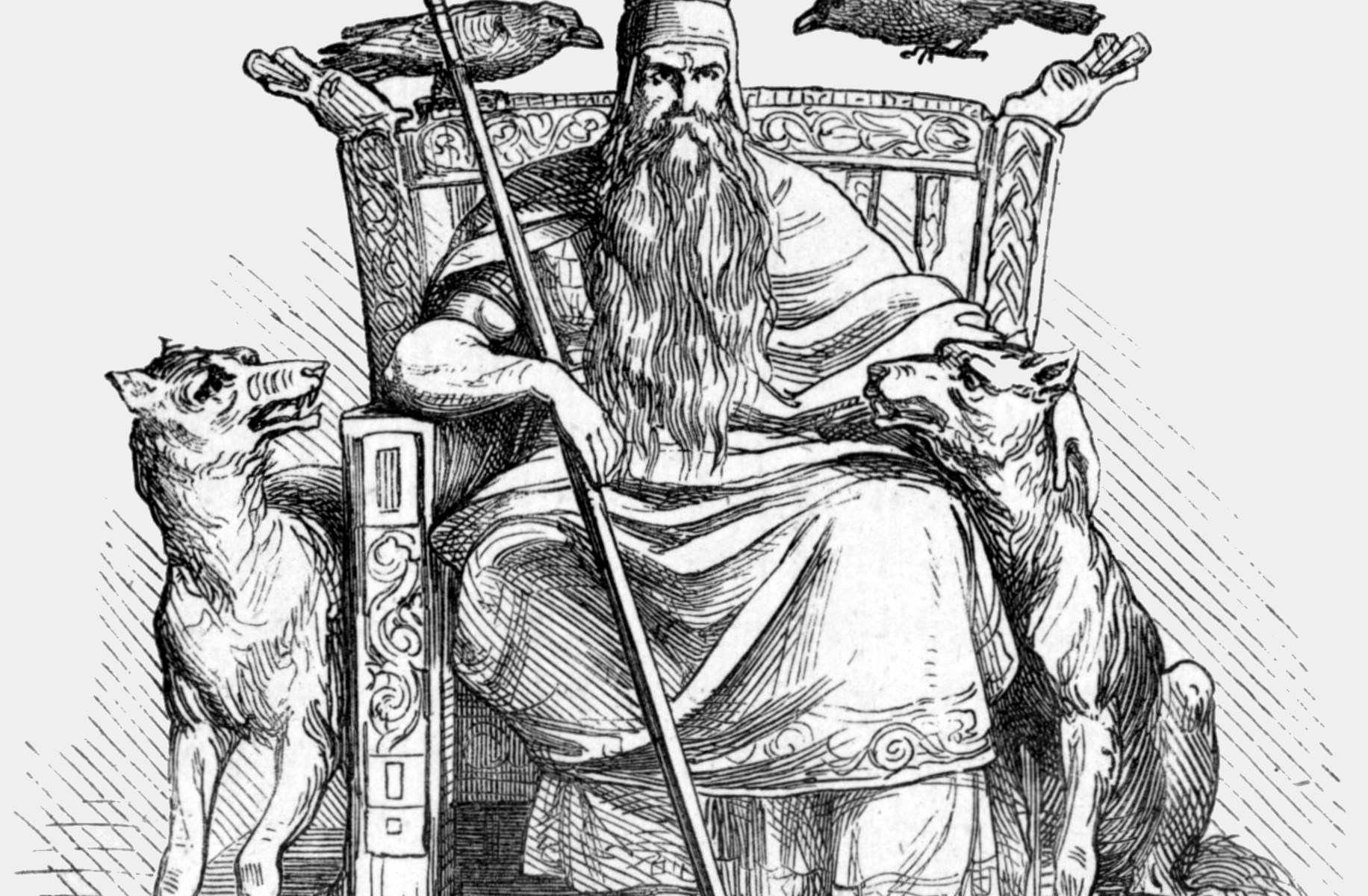
Logically, the central place in the week belongs to the central deity of the Germanic pantheon: the Anglo-Saxon Woden (known as Odin or Wotan among other Germanic peoples). Here we have a bit of a mismatch, as the Latin term for Wednesday (Saxon Wodnesdæg) happens to be dies Mercuri – the day of Mercury, who, while important, is not the principal deity of the Roman pantheon.
THURSDAY
Thor’s day? You’ve guessed it! This one comes from the Old English Ðunresdæg. Thor was the son of Odin, and the Germanic god of thunder whose cult was extremely popular among the Germanic peoples. Here, too, we have a mismatch as the Latin term for this day is dies Jovi – the day of Juppiter (jeudi in French, joi in Rumanian, jueves in Spanish). As the main deity of the Roman pantheon, Juppiter should correspond to Odin rather than Thor.
FRIDAY
Freitag in German, fredag in Swedish, Norwegian and Danish… A “free” day? Although it’s tempting to associate it with the end of the working week and the beginning of the weekend, it actually happens to be the day dedicated to love! The Fri- in Friday (Old English Frigedæg) refers to Frigg, Odin’s wife and the goddess of love, marriage and domestic life. This, in turn, goes back to the Latin term for Friday: dies Veneris – the day of Venus – the Roman goddess of love, visible in the French word vendredi, Italian venerdi, Romanian vineri etc. In comparison, the Slavic petak / pátek / piątek et sim. sounds rather boring, as it simply refers to the number five.
SATURDAY
Saxon Sæternesdæg is the one weekday name that doesn’t derive from the name of a Germanic deity, but that of the Roman god Saturn (Lat. dies Saturni),the ancient Roman agricultural deity connected with sowing and plenty. Interestingly, in many other European languages, under the influence of Christianity, the name for Saturday comes from the Hebrew word shabbat (subota / sobota et sim. in Slavic languages, sabbado in Italian, sâmbătă in Romanian etc.).
SUNDAY
This one is the easiest to figure out: Sunday (Saxon Sunnandæg) is quite literally the day of the Sun, mirroring the Latin dies Solis – the day dedicated to the solar deity Sol.This being a solemn day in Christian, i.e. church calendar, in many other European languages you will find it called “the Lord’s day”: domenica in Italian, dimanche in French, domingo in Portuguese. In some Slavic languages, though, it simply means “no-work”: nedelja / nedjelja in South Slavic dialects, neděle in Czech, niedziela in Polish. Having said that, there is the very pious sounding voskresen’ye (literally “resurrection”) in Russian, obviously referring to the resurrection of Jesus.
It’s interesting to see how ancient, pre-Christian paganism has remained present through the use of these everyday words in many European languages, in some places mixing with later Christian influences. Over the centuries, there have been attempts to change these words in English, making the terminology less pagan. But they are still here, and not likely to change any time soon.
NOTES

I’m a freelance language tutor (English, Latin, Classical Greek), researcher, and a literary scholar currently based in Belgrade, Serbia.
If you wish to receive new content from my blog – as soon as it’s published – please enter your email address in the box below. You can also subscribe to my free monthly Newsletter and get a regular recap with additional content.
To support my work, you can send me a donation via PayPal. It would be greatly appreciated!
Discover more from grammaticus
Subscribe to get the latest posts sent to your email.


Great read! Thank you very much for sharing!
LikeLiked by 1 person
Great article 🙂 ! Thanx a bunch for sharing!
LikeLiked by 1 person