
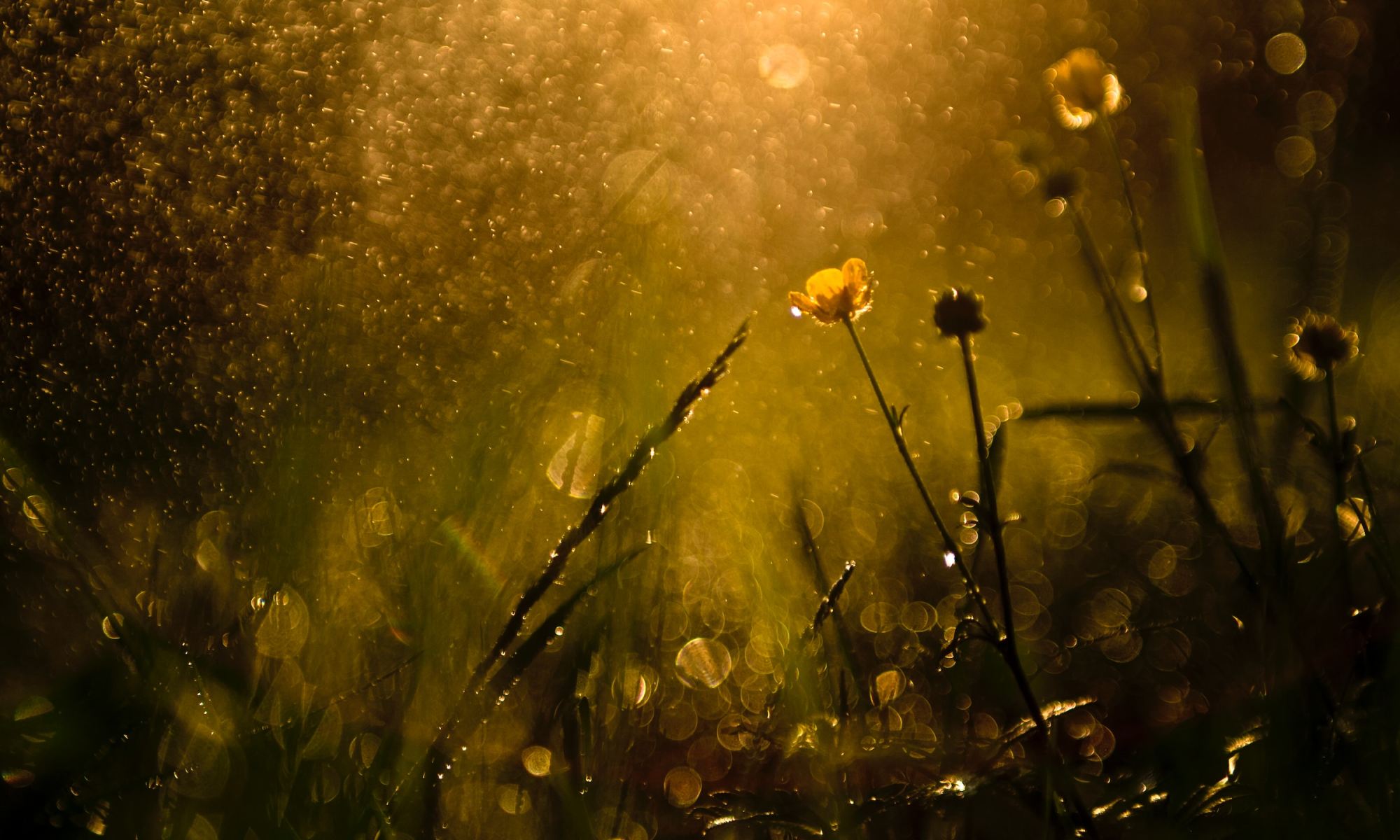
I don’t know about you, but I just love a nice downpour on a hot summer day. As someone who really doesn’t stand the heat, I appreciate those moments of cool freshness, and I know I’m not the only one: the plants and animals vitally depend on the rain during those hot, dry months too.
In this post I’m going to share with you a poem on this exact topic. It was written by Henry Wadsworth Longfellow (1807–1882), and it’s titled ‘Rain in Summer’. You can find it online often cited in much shorter versions, with just the first two or three stanzas. This one, however, is the integral version. It is rather long, but as you’ll see, it’s easy to follow.
Instead of exercises for English language learners that I usually include in my poetry posts, what you’ll find instead are links throughout the poem leading you to images explaining some of the vocabulary. I hope you’ll find them useful!
How beautiful is the rain!
After the dust and heat,
In the broad and fiery street,
In the narrow lane,
How beautiful is the rain!

How it clatters along the roofs,
Like the tramp of hoofs
How it gushes and struggles out
From the throat of the overflowing spout!

Across the window-pane
It pours and pours;
And swift and wide,
With a muddy tide,
Like a river down the gutter roars
The rain, the welcome rain!

The sick man from his chamber looks
At the twisted brooks;
He can feel the cool
Breath of each little pool;
His fevered brain
Grows calm again,
And he breathes a blessing on the rain.

From the neighboring school
Come the boys,
With more than their wonted noise
And commotion;
And down the wet streets
Sail their mimic fleets,
Till the treacherous pool
Engulfs them in its whirling
And turbulent ocean.

In the country, on every side,
Where far and wide,
Like a leopard's tawny and spotted hide,
Stretches the plain,
To the dry grass and the drier grain
How welcome is the rain!

In the furrowed land
The toilsome and patient oxen stand;
Lifting the yoke encumbered head,
With their dilated nostrils spread,
They silently inhale
The clover-scented gale,
And the vapors that arise
From the well-watered and smoking soil.
For this rest in the furrow after toil
Their large and lustrous eyes
Seem to thank the Lord,
More than man's spoken word.

Near at hand,
From under the sheltering trees,
The farmer sees
His pastures, and his fields of grain,
As they bend their tops
To the numberless beating drops
Of the incessant rain.
He counts it as no sin
That he sees therein
Only his own thrift and gain.

These, and far more than these,
The Poet sees!
He can behold
Aquarius old
Walking the fenceless fields of air;
And from each ample fold
Of the clouds about him rolled
Scattering everywhere
The showery rain,
As the farmer scatters his grain.

He can behold
Things manifold
That have not yet been wholly told,—
Have not been wholly sung nor said.
For his thought, that never stops,
Follows the water-drops
Down to the graves of the dead,
Down through chasms and gulfs profound,
To the dreary fountain-head
Of lakes and rivers underground;
And sees them, when the rain is done,
On the bridge of colors seven
Climbing up once more to heaven,
Opposite the setting sun.

Thus the Seer,
With vision clear,
Sees forms appear and disappear,
In the perpetual round of strange,
Mysterious change
From birth to death, from death to birth,
From earth to heaven, from heaven to earth;
Till glimpses more sublime
Of things, unseen before,
Unto his wondering eyes reveal
The Universe, as an immeasurable wheel
Turning forevermore
In the rapid and rushing river of Time.
ADDITIONAL RESOURCES
From drizzle to downpour: common words and phrases to describe rainy weather
‘Haunted Houses’ by Henry Wadsworth Longfellow
COVER IMAGE CREDITS
Basil Smith via Unsplash
NOTES

I’m a freelance language tutor (English, Latin, Classical Greek), researcher, and a literary scholar currently based in Belgrade, Serbia.
If you wish to receive new content from my blog – as soon as it’s published – please enter your email address in the subscribe box below.
To support my work, you can send me a donation via PayPal. It would be greatly appreciated!
Discover more from grammaticus
Subscribe to get the latest posts sent to your email.


Whatt a lovely space you have created here, thank you!
LikeLiked by 1 person