
This vocabulary post is primarily intended for learners of English as a Second or Foreign Language, at the intermediate (B1/B2) level.
One of my favourite free-time activities is going for long walks in nature, and taking photos of interesting plants and animals. It’s a very calming and relaxing way to spend your time, away from any noise, stress and distraction.
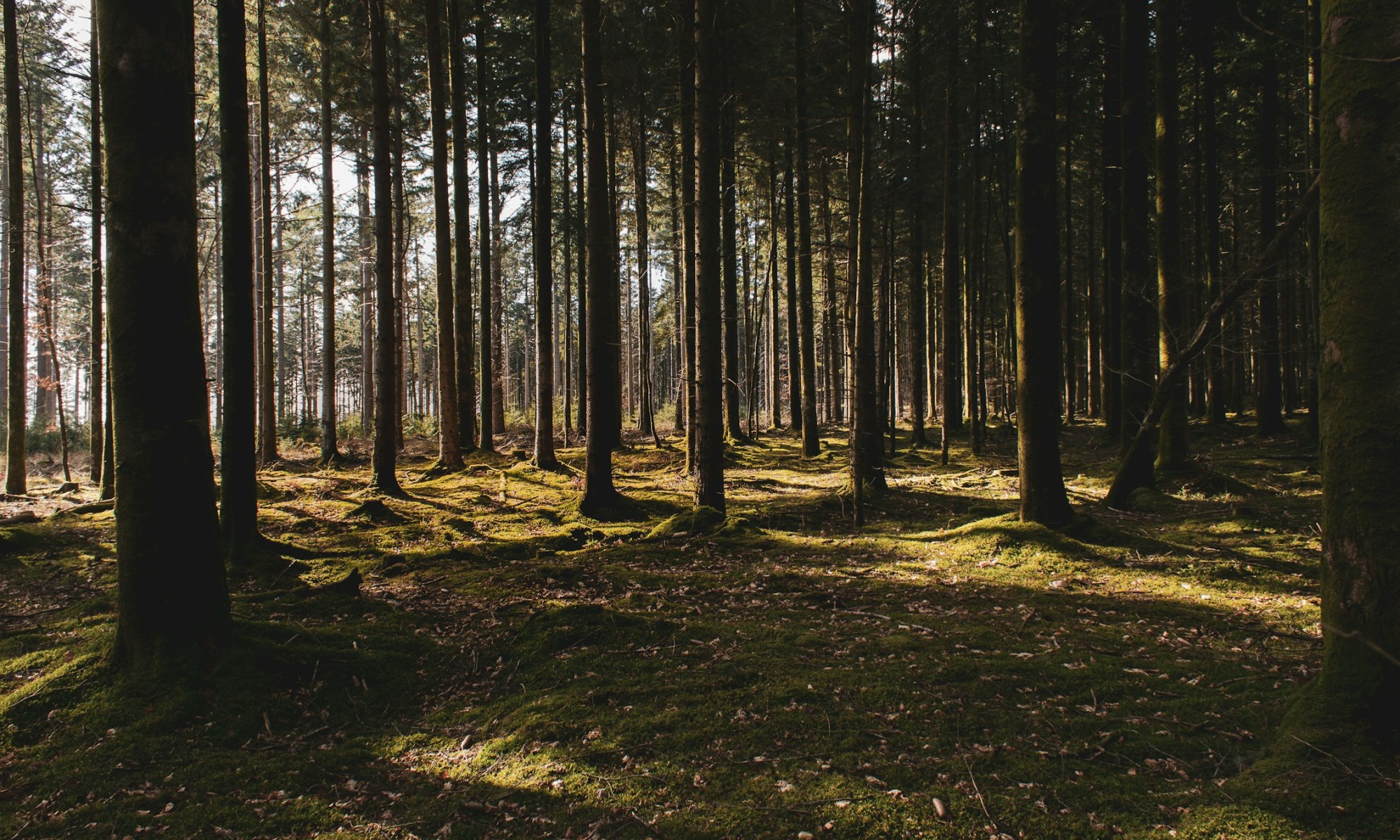
While I enjoy different kinds of landscapes, my favourite places are woodlands, as there’s always something interesting to see, it’s never boring! Also, spending time surrounded by trees is very healthy, for both mind and body.
In this vocabulary post, we’ll have a look at some useful nouns you can use to describe different types of woodlands.
WOODS AND FORESTS – IS THERE A DIFFERENCE?
You probably already know the nouns wood(s) and forest, the two most common words to describe an area covered with trees. In many languages it’s translated with the same word, but in English they don’t mean exactly the same (although, to be honest, many do use them interchangeably). The main difference has to do with the size: simply put, a forest is much bigger than a wood.
More technically, their definition also includes the size of the tree canopy. For example, in the U.S. if the tree canopy covers between 65 to 100% of the land, it’s considered a forest; if the percentage is lower, the area is defined as woods.
And what’s the difference between wood and woods? At first glance, woods is simply the plural of a wood – and it can be, but it’s a bit more complicated. The singular countable noun, a wood, is more common in British English, while the plural-only woods is more frequent in American English. Additionally, wood can also be used as an uncountable noun, meaning the hard material, the substance of the trunk and branches of a tree. That’s where the adjective wooden comes from, meaning something made of wood, as in the material.
WORDS FOR SMALL WOODS AND GROUPS OF TREES
What words to use if a group of trees is neither a forest nor a wood, but just a relatively small group of trees? Well, I have a treat for you, as the English vocabulary is unusually rich in this area. Let’s have a look at some of the options:
- a grove: a small group of trees, usually with little or no undergrowth (i.e. bushes and other plants growing underneath); it can imply an enclosed area, either for the cultivation of fruits, or some other purposes, including spiritual and religious; it almost always implies a very pleasant and calming area, pleasing to the eye
- a coppice / a copse: a woodland consisting of closely planted trees that are regularly cut back in order to stimulate their growth
- a stand (of trees): the term used by foresters to describe a part – a unit – of a forest with some special, recognisable characteristics (such as the predominance of a single tree species); don’t confuse this term with a tree stand, which is an elevated platform used by hunters preying on unsuspecting animals
- a thicket: a small area covered with trees and bushes growing closely together, and difficult to walk through; typically the trees are of the same species
- a spinney: another word for a thicket; it comes from the Latin word spina – a thorn, so you can immediately think of a bushy, thorny thicket that is going to be very difficult to go through
- a chaparral: yet another word for a thicket, but one that takes you to the sunny Mediterranean; a chaparral consists of low-growing shrubs and trees such as small evergreen oaks and other dwarf trees
- an avenue: a word you probably know as it often appears in street names; technically, an avenue is a line of trees (thus sort of a woodland), planted along both sides of a road (compare this with a boulevard, which is the term for a city street lined with trees)
ADDITIONAL READING
There are many more words like these, some of them either technical or very archaic. If you want to learn more, I suggest the following resources for additional study:
Exploring the Enchanting Collective Nouns for Trees
NOTES

I’m a freelance language tutor (English, Latin, Classical Greek), researcher, and a literary scholar currently based in Belgrade, Serbia.
If you wish to receive new content from my blog – as soon as it’s published – please enter your email address in the subscribe box below.
To support my work, you can send me a donation via PayPal. It would be greatly appreciated!
COVER PHOTO CREDIT
Discover more from grammaticus
Subscribe to get the latest posts sent to your email.
 grammaticus