

Robert Louis Stevenson (1850–1894) was a Scottish novelist, poet, and travel writer whose adventurous imagination and recognisable style made him one of the most celebrated authors of the Victorian era. Still widely read, he is nowadays best known for classic works of literature such as Treasure Island (1883) and Strange Case of Dr Jekyll and Mr Hyde (1886).
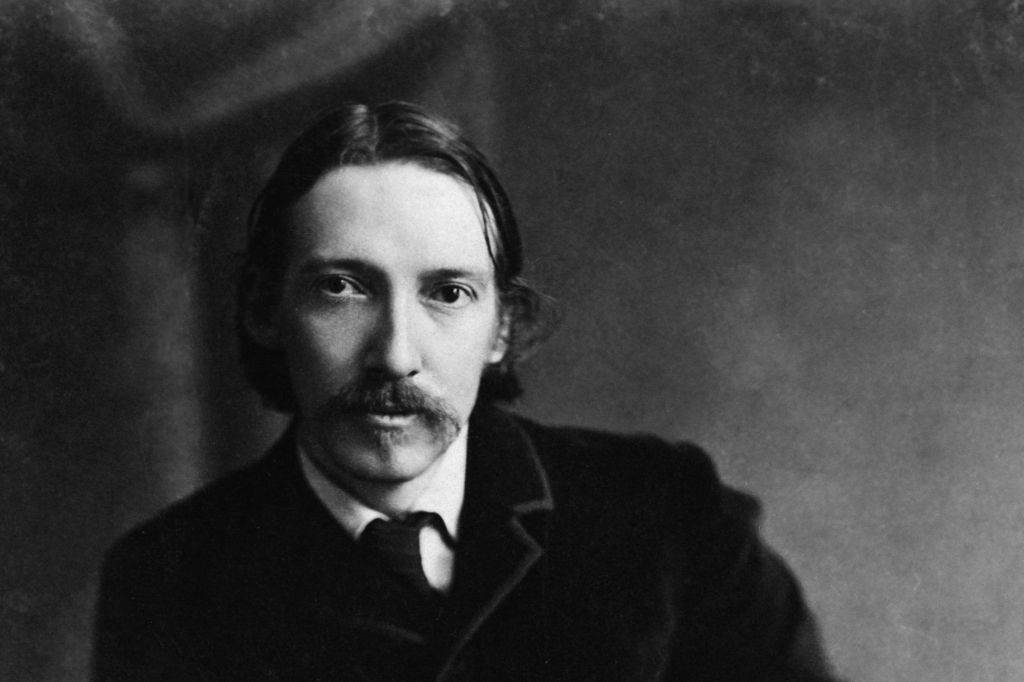
In this post, however, we’ll get acquainted with one of his poems: “Summer Sun” was first published in 1885, as part of his collection titled A Child’s Garden of Verses. In it, the poet personifies the Sun, presenting him as “the gardener of the World” — a kind presence that brings life, warmth, and gladness to all living things.
Below the poem you’ll find a vocabulary exercise and discussion points designed for English language learners. For more summer-related poetry posts, please click on the links at the bottom of the page.
Great is the sun, and wide he goes
Through empty heaven without repose;
And in the blue and glowing days
More thick than rain he showers his rays.

Though closer still the blinds we pull
To keep the shady parlour cool,
Yet he will find a chink or two
To slip his golden fingers through.

The dusty attic spider-clad,
He, through the keyhole, maketh glad;
And through the broken edge of tiles,
Into the laddered hay-loft smiles.

Meantime his golden face around
He bares to all the garden ground,
And sheds a warm and glittering look
Among the ivy's inmost nook.

Above the hills, along the blue,
Round the bright air with footing true,
To please the child, to paint the rose,
The gardener of the World, he goes.
VOCABULARY EXERCISE
Find the nouns in the poem with the following meaning:
- a sitting room, a drawing room
- a small, quiet space; a corner
- a period of resting and relaxation
- a small, narrow opening
- a window covering used to control light and privacy
Click here for the answer key.
DISCUSSION POINTS
- What kind of mood or feeling does the poem create? Is it energetic, calm, or something else?
- In many cultures, the Sun is presented as a “he” — a masculine figure, while the Moon is often presented as a “she”. Why is that, do you think?
- This poem is set in summer. How might the poet describe the winter sun?
MORE SUMMER-THEMED POEMS
“Rain in Summer” by Henry Wadsworth Longfellow
“In Summer” by Lord Alfred Douglas
NOTES

I’m a freelance language tutor (English, Latin, Classical Greek), researcher, and a literary scholar currently based in Belgrade, Serbia.
If you wish to receive new content from my blog – as soon as it’s published – please enter your email address in the subscribe box below.
To support my work, you can send me a donation via PayPal. It would be greatly appreciated!
COVER PHOTO CREDIT
Discover more from grammaticus
Subscribe to get the latest posts sent to your email.
 grammaticus
It strikes me that the sun is male in Stevenson’s English, just as it is officially in French and Spanish (and, without any article, in Chinese concepts). The only language I know that refers to the sun as female (and the moon as male) is German (die Sonne / der Mond). What about the languages you know?
LikeLiked by 1 person
Indeed, I was thinking about German, as the only one I know with the female Sun. Strangely enough, in Serbian and Croatian the word Sunce is neuter, while the Moon (Mesec / Mjesec) is masculine!
LikeLiked by 1 person