
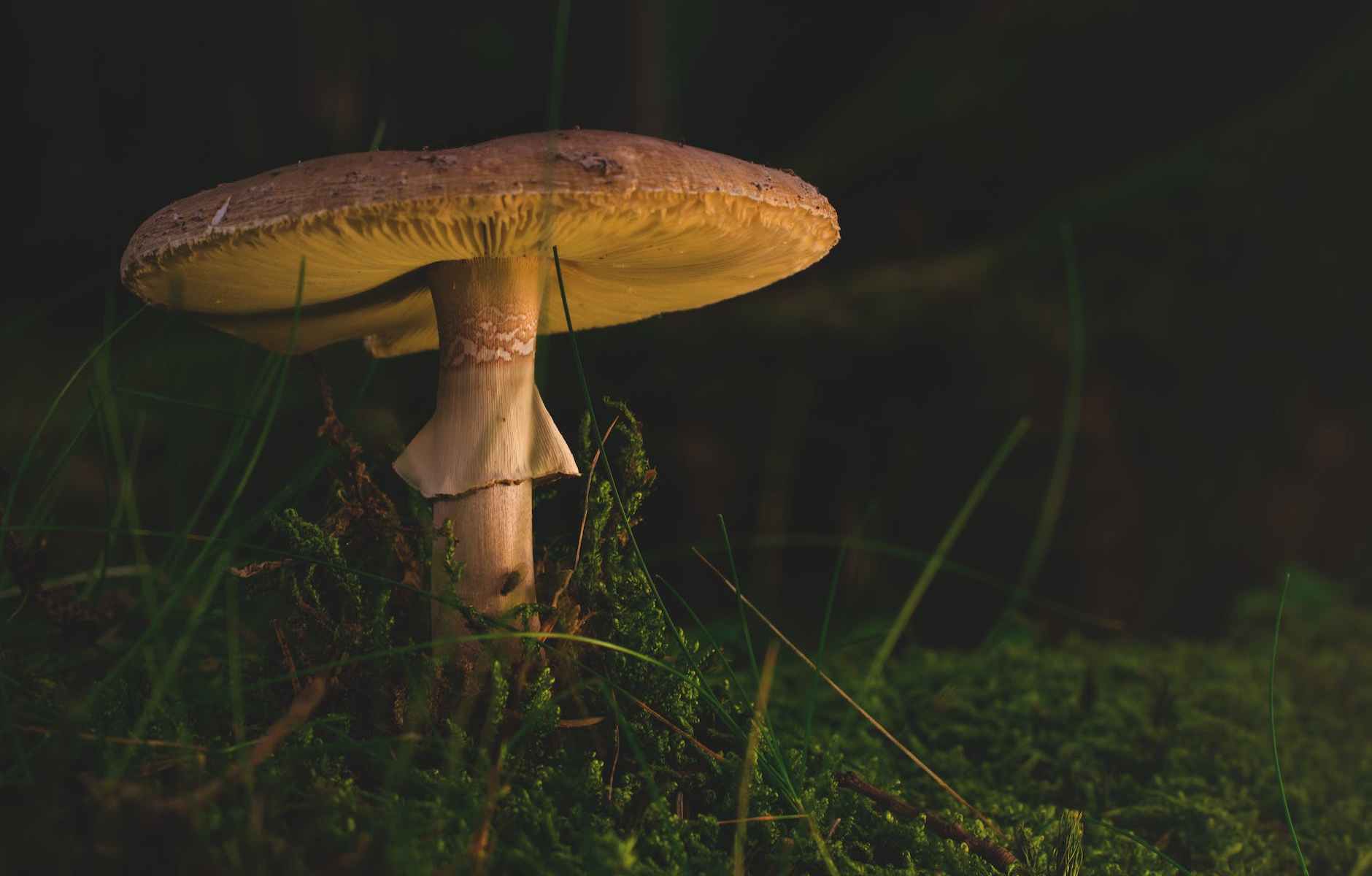
Over the past three years, possibly as an unexpected effect of the COVID-19 pandemic, lockdowns and social distancing, I’ve found myself exploring something I’d never expressed much interest in: mushrooms. It began innocently enough: as I started taking my solitary nature walks, I also started noticing these silent and elusive creatures of vastly different colour, shape, and form. Neither plants nor animals, and notoriously difficult to categorize, once I became aware of them, I was completely mesmerized. I started taking snapshots of all the fungi I’d come across and search online for possible identification. After that, I joined a few online groups created by and for amateur mycophiles. Within weeks, I completely fell for them – hook, line and sinker!
Apparently, I’m not alone. Long neglected, marginalised, even belittled as a field, mycology is currently experiencing a massive rise in popularity, partly fuelled by the rise of the concept of citizen science, as hundreds of thousands of people now find themselves going down the same path I’ve inadvertently taken. As more and more people become amateur mycologists, there’s a lot of new data added to the pool of knowledge about the mysterious fungal kingdom thanks to apps such as iNaturalist and other avenues of communication with the academia. As far as mycology is concerned, these are the very best of times.

And that’s what the book “In Search of Mycotopia: Citizen Science, Fungi Fanatics, and the Untapped Potential of Mushrooms” by Doug Bierend is essentially about (if you couldn’t tell from the title). Released in 2021, it’s very au courant. Although on a topic that might seem very niche, you’ll be amazed by the connections the author makes between the fascination with fungi and a host of social and political issues, from commitment to feminist and queer activism to the fight for racial equality and progressive ideas in general. If you’re struggling to connect the dots and find any commonality between, say, leftist activism and mycophilia, this book will be an eye-opener.
Having said that, half-way through the book, I felt portions of it were packed with too much unnecessary information. Readable as they are, a less generous editor would’ve easily eliminated entire paragraphs, namely those in which the author assumes the role of a reporter, interviewing various fungi fanatics and business owners in particular, describing their operations in great detail. In that sense, the book will tell you a lot more about the current mycophile scene and fungi market in the U.S. than about the fungi themselves.
If you’re mainly into popularly written social studies with a documentary flavour, you’ll love this book. But if you’re looking for informative reading material on mycology as such, this title is likely to be of passing interest, prone to ending up very dated relatively soon. I’d still like to recommend it, particularly if you’ve never given fungi much thought, as Bierend’s writing will definitely broaden your horizons in some pretty surprising ways.
“In Search of Mycotopia: Citizen Science, Fungi Fanatics, and the Untapped Potential of Mushrooms” by Doug Bierend. Published by Chelsea Green Publishing in March 2021. 336 pp.
Discover more from grammaticus
Subscribe to get the latest posts sent to your email.
 grammaticus
An excellent review.
LikeLiked by 2 people
Perfect review! I really want to read it now.
While I always loved pictures of funghi I never dived into the topic fully. Thank You for sharing.
C.
LikeLiked by 2 people