
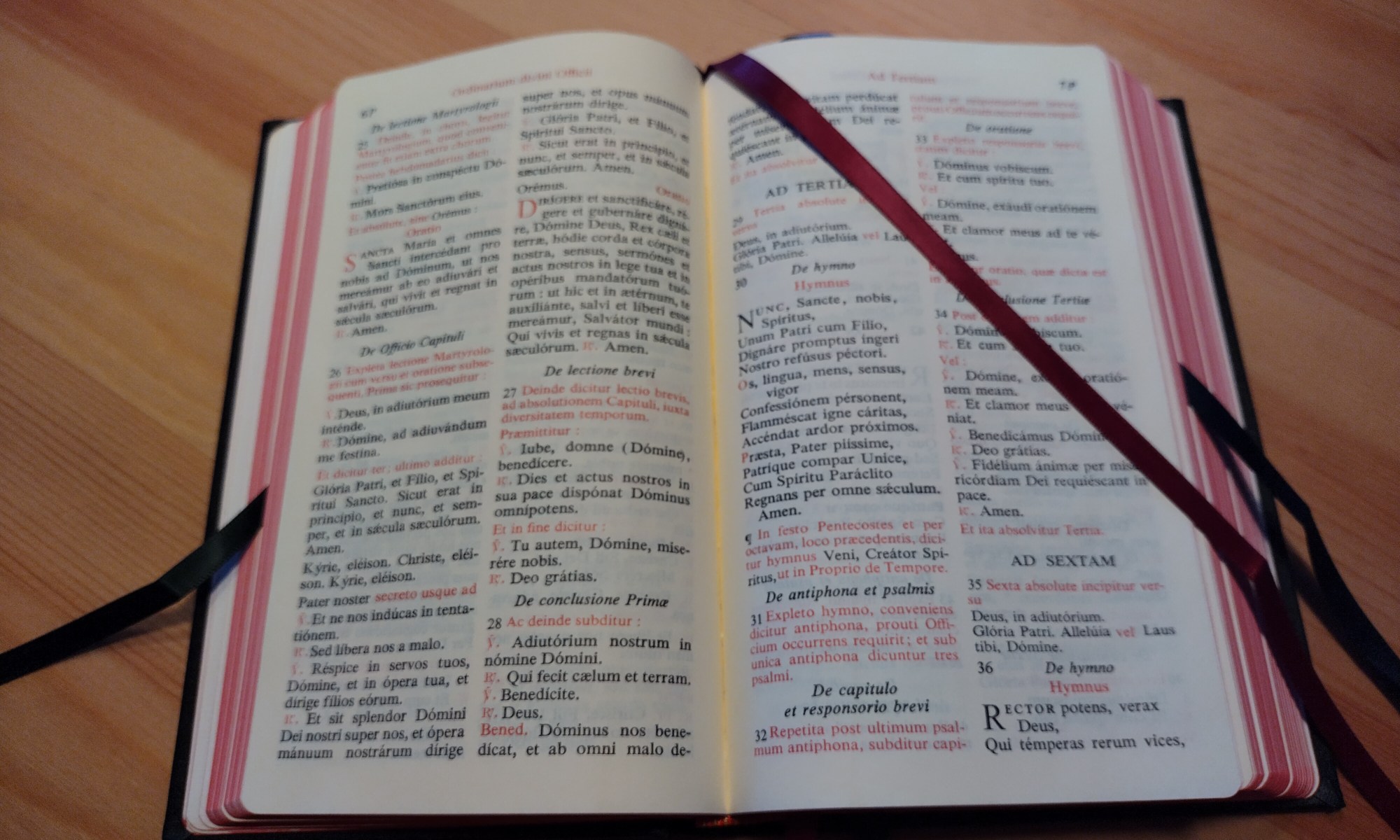
In this post I will present the latest addition to my Latin library, which is a single-volume edition of the 1962 Diurnale Romanum breviary.
The post can be read as an addendum to ‘Learn Latin using contemporary resources’ or as a sample review related to ‘Let’s talk about books and literature’ article found elsewhere on this website.
A ‘diurnal’ (diurnale in Latin) simply means ‘daily’ or ‘in everyday use’ (that is where the word ‘journal’ originally comes from), and in this particular instance it refers to a prayer book containing daily prayers and cycles of Psalm readings, based on the medieval monastic practices.
There is a number of breviaries in use nowadays, some of them very thick volumes (with a hefty price tag, too). Also, some are bilingual or in modern languages, others are Latin-only; some are illustrated, others are not. Not to mention that they may follow the rules of different monastic traditions, or even come from different Christian denominations, thus differing in their selection of readings and in other pertinent ways.

The diurnal presented here contains the canonical hours following the traditional 1962 Roman Breviary, i.e. lauds, prime, terce, sext, none, vespers and compline—but no matins (including the matins would have increased the size of the volume exponentially). The Psalms are of the standard Vulgate version, and the book is Latin-only throughout. There is also a church calendar at the beginning, and various additional prayers at the back. As there is no table of contents, you need to explore the book to discover everything it offers; there is definitely more than meets the eye.
While this diurnal is also available in pocket size (3.5 x 5.5 in.), bound in flexible leatherette, I opted for the full-size, but not substantially larger, hardbound version (4.5 x 7.5 in.). As seen in the cover photo at the top of this post, it comes with five ribbons, each in a different colour, intended to be used as bookmarks. And those are definitely needed, as one needs to do some flicking through to find the relevant sections for each season, day and hour. I thought finding my way around would be tricky, but after only two or three days I settled into a very comfortable routine.
It is a surprisingly small volume thanks to very thin but largely non-transparent Bible paper, ivory-coloured. I was worried that the font might be too small for me to read but, fortunately, that is not the case.
While the book does not contain many illustrations, there are some at the beginning of each major section, all of them black-and-white, in the same style.

Since I have received this volume only recently, I cannot comment on its durability, but so far it looks pretty sturdy; the binding seems very good and it does not look like pages will start falling off any time soon. Although this is a ‘full-size’ version, it is actually quite small as I have already mentioned, and it sits well in the hand.
Since this version is Latin-only, I would not recommend it to people who do not have at least a working knowledge of the language; merely following the instructions is going to be a challenge, let alone saying and fully understanding the meaning of the Psalms and prayers. However, it can be a wonderful learning tool for those who are willing to spend some additional time on improving their Latin (repetitio est mater studiorum, as they say—you can test this theory by using the Diurnale on a regular basis!).
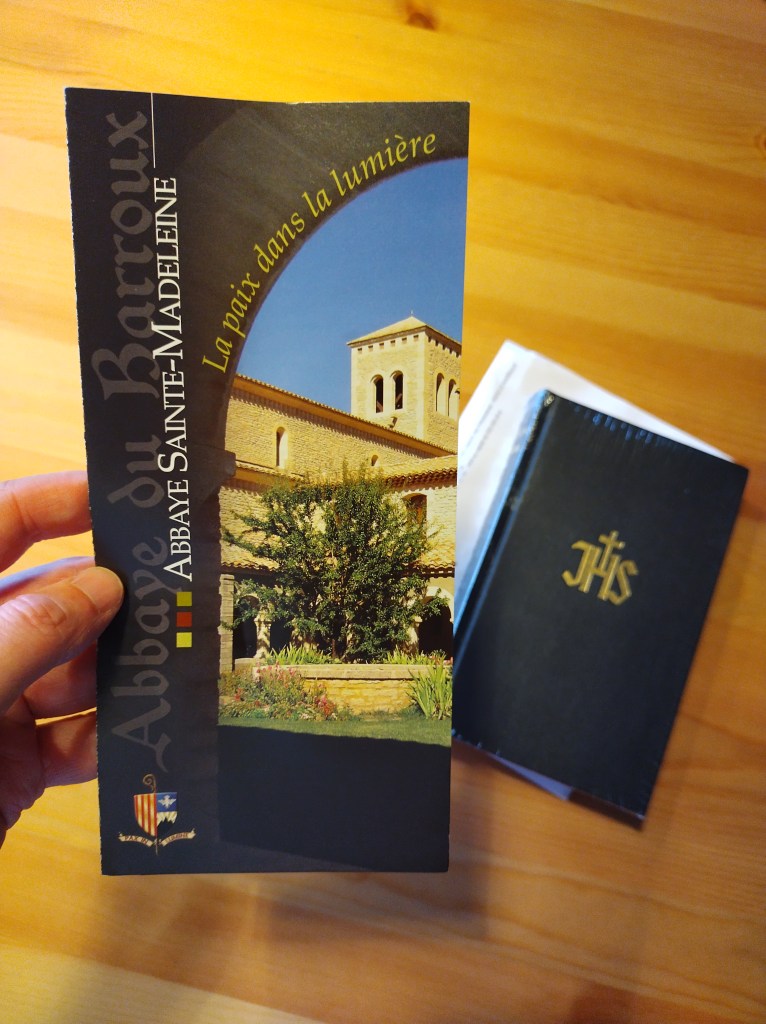
I know from online forums that many enquire as to where they can buy this or similar titles in Latin. My personal recommendation is the online shop of the Benedictine abbey Abbaye Sainte-Madeleine located in Barroux, France. (French-only; this particular item can be found by clicking here. Other items of interest to Latinists can be found under ‘Liturgie romaine’ heading in the left-hand menu of their website.)
Discover more from grammaticus
Subscribe to get the latest posts sent to your email.
 grammaticus
Good day! Do you know a store online that sells pocket-sized divinum officium? Thank you!
LikeLiked by 1 person
Hi! Apart from the online shop mentioned in the article above, I suggest you do a bit of searching on eBay where you will find a lot of small, independent Catholic publishers.
My diurnal is probably the smallest size you can find; the full Officium Divinum happens to contain quite a lot of text, so pocket-sized essentially means abridged. If that’s what you’re looking for, visit the Boutique Barroux store (link at the end of the article).
LikeLike