

In the days leading up to Halloween, one of the highlights of the dark season of the year, I’d like to share some adjectives that you can use when talking about the weird, the sad, and the gloomy. Twenty six words, to be precise, one for each letter of the English alphabet, along with some comments on their etymology and example sentences.
APOCALYPTIC
The original Greek word apokalypsis means ‘a revelation’, or more literally ‘uncovering of something that was previously hidden’. Influenced by the message of the Book of Revelation, the final book of the Bible, in English and other modern languages the meaning has long ago shifted to signify something disastrous and catastrophic.
Example sentence: The eruption of Vesuvius in 79 AD was an apocalyptic event for the residents of Pompeii.
BALEFUL
Something that is harmful or destructive can be described as ‘baleful’. Someone’s threatening, sinister look, the ‘evil eye’ of the old tales and superstitions, can also be described using this adjective. The root word bale comes from the Old English word bealu, literally meaning ‘evil’.
Example sentence: The robber had a baleful look; everyone felt scared and threatened.
CREEPY

There are lots of synonyms for this one, among them ‘scary’, ‘horrifying’, ‘chilling’, ‘hair-raising’. The verb ‘creep’ comes from an Old English word, creopan, which describes the movement of a reptile or insect on the ground. Later on, creep began to be used for the sort of creepy feeling in one’s body, caused by fear.
Example sentence: It feels creepy inside that old, abandoned house.
DIREFUL
This is an archaic adjective that you may encounter in literary works. It indicates something extremely bad and horrid, often in a sense of a coming threat or danger. The noun ‘dire’ is still in use: someone can suffer ‘dire consequences’ of their behaviour, i.e. very serious, grave consequences. This word comes from the Latin adjective dirus, meaning serious, dreadful.
Example sentence: We were all shaken by the direful news from the front.
EERIE
This adjective is used to describe something very weird and scary, in a kind of mysterious way. It comes from the Old English adjective earg, meaning ‘cowardly’, ‘fearful’.
Example sentence: I felt most uncomfortable walking down that dark, eerie path through the forest.
FOREBODING
‘To forebode’ means to be convinced that something bad is about to happen. For instance, a sign of the coming misfortune or disaster, i.e. an omen, can be described as (a) foreboding. The prefix fore– is a Middle English word meaning ‘before’, ‘in advance’, while bode has its origin in the Old English verb bodian – ‘to announce’. Although it can be used as an adjective, it’s more commonly used as a noun.
Example sentence: When I received the letter, I immediately felt a sense of foreboding.
GHOSTLY
Someone or something that looks like a ghost; ‘spectral’ is a good synonym. Or something that feels somehow unreal or supernatural, causing fear. The word ‘ghost’ comes from the Old English gast, via Middle English gost, meaning ‘a spirit’.
Example sentence: As we were walking past the cemetery, we saw a ghostly figure in the distance.
HAUNTING
Used as a noun, a haunting is nowadays typically used to refer to a presence of a ghost. As an adjective, it can be used for something that stays in your memory, with a touch of melancholy or sadness. The verb ‘to haunt’ has a fascinating etymology: coming from Old Norse heimta – to return home, via Old French hanter – to live in, to inhabit, it entered Middle English in the form of haunten, meaning ‘to inhabit’, ‘to reside’.
Example sentence: The melody coming from the old music box was very beautiful and haunting.
ILL-BODING
Similar to foreboding mentioned earlier, ill-boding also has the meaning of portending (i.e. predicting) bad news or events. In modern English, it’s more common to use it as a verb: to bode ill, meaning to foretell a bad, negative outcome. The adjective ‘ill’ comes from the Old Norse illr meaning ‘evil’ or ‘bad’.
Example sentence: We knew things wouldn’t turn out well when she entered the room with an ill-boding look on her face.
JINXED
‘To jinx’ means to bring bad luck; something or someone jinxed is unusually unlucky or unfortunate, as if under a curse. There are many fanciful theories about the etymology of this word, but it most likely comes from the early 20-century American English baseball slang.
Example sentence: I can’t do anything right today – I feel jinxed!
KOOKY
‘Kooky’ is something that is weird and bizarre, a bit crazy and eccentric, usually in a likeable and interesting way. However, colloquially it can also mean ‘mentally deranged’, ‘mad’. The word comes from the American English slang of the early 1960s.
Example sentence: The kids went trick-or-treating wearing kooky vampire costumes.
LUSTERLESS
This is something that has lost its shine, it looks old and colourless. The noun ‘lustre’ (AE ‘luster’) means ‘radiance’, ‘shine’, ‘gloss’ and it comes all the way from Latin lustrare = to shine, to illuminate.
Example sentence: His eyes were dim and lusterless; I thought he might be dead.
MYSTERIOUS
The noun ‘mystery’ has quite a few meanings in English; the adjective typically refers to something very difficult to understand – something inexplicable. The original Greek word mysterion was connected with ancient initiatory rites whose specifics had to remain secret to the uninitiated.
Example sentence: Everyone in the village has been affected by a mysterious illness.
NUMINOUS
This adjective can be used as a synonym for supernatural and mysterious, inexplicable to the human mind; we can feel something strange and otherworldly, but we can’t fully describe it. It comes from the Latin word numen which, among other things, referred to divine presence, either in material objects, or in certain special locations.
Example sentence: The lonely spot by the lake felt numinous, as if it was inhabited by fairies.
OMINOUS
Similar to foreboding and ill-boding, ominous brings only bad news; it’s something threatening. The Latin noun omen (also used in English), is more neutral in meaning: an omen is a sign that helps us predict the future; it can be good or bad.
Example sentence: Ominous dark clouds appeared on the horizon.
PHANTASMAL

‘A phantasm’ is a synonym for a ghost, and it comes from the Greek word phantasma – a ghost, an apparition. ‘Phantasmal’ is thus a synonym for ‘ghostly’, ‘spectral’. It can also mean ‘unreal’, referring to something out of this world.
Example sentence: Mary screamed when a phantasmal figure suddenly appeared out of nowhere.
QUEER
Before it came to refer to sexual and gender identities that don’t conform to heteronormativity, this adjective primarily meant ‘strange’, ‘weird’, ‘unusual’. In the 16th century, when it was borrowed from German, it meant ‘off-centre’ (compare with modern German quer = ‘diagonal’).
Example sentence: You better be careful in this town: queer things are known to happen after sunset.
RUMINATIVE
‘To ruminate’ means to think deeply, and for a long period of time. Psychologists use it to refer to one’s obsessive focus on negative past or present experiences. The verb ‘to ruminate’ comes from the Latin verb ruminare = to chew cud! Cows ruminate food, and we ruminate thoughts in our mind.
Example sentence: The experience of war made Marcus very depressed and ruminative.
SINISTER
Another word signifying that something bad or evil is going to happen; or that something or someone is evil. It comes from the Latin word for the left / on the left side, and it is connected with widely held beliefs and superstitions about the negative, unlucky and harmful character of that side or direction.
Example sentence: He had a sinister look on his face, as if he was about to do something dreadful.
TERRIFYING
‘Terror’ is a state of intense fear; whatever causes it can be described as ‘terrifying’. These words come from the Latin word terror – ‘fear’, ‘panic’.
Example sentence: Just as we were leaving the house, we heard a terrifying scream from one of the rooms.
UNCANNY
This is a good substitute for ‘eerie’ and ‘mysterious’: uncanny is something weird or abnormal in that it feels supernatural, and it may cause us to feel uneasy. Coming from Scottish English canny meaning ‘lucky’, uncanny originally meant ‘unlucky’, ‘awkward’, ‘clumsy’ et sim. In the 18th century it gained the additional connotation of something supernaturally strange.
Example sentence: He has an uncanny ability to predict future events. He must be psychic or something!
VILE
Coming from the Latin word vilis meaning ‘cheap’, ‘worthless’, ‘common’, the English word vile first referred to moral corruption: a vile person is morally flawed, wicked. From there, it came to be used for other things that are extremely bad or evil, from mood to weather.
Example sentence: What’s wrong with Nicholas? He’s been in such a vile mood lately.
WEIRD
Coming from the Old English word wyrd meaning ‘fate’, ‘destiny’, the Middle English weird shifted meaning to refer to something that has the power to control fate, such as by means of magic. The current meaning originated in the 18th/19th century, in the sense of uncanny, strange, or odd.
Example sentence: He is such a strange person, it always feels weird talking to him.
XENOLOGICAL
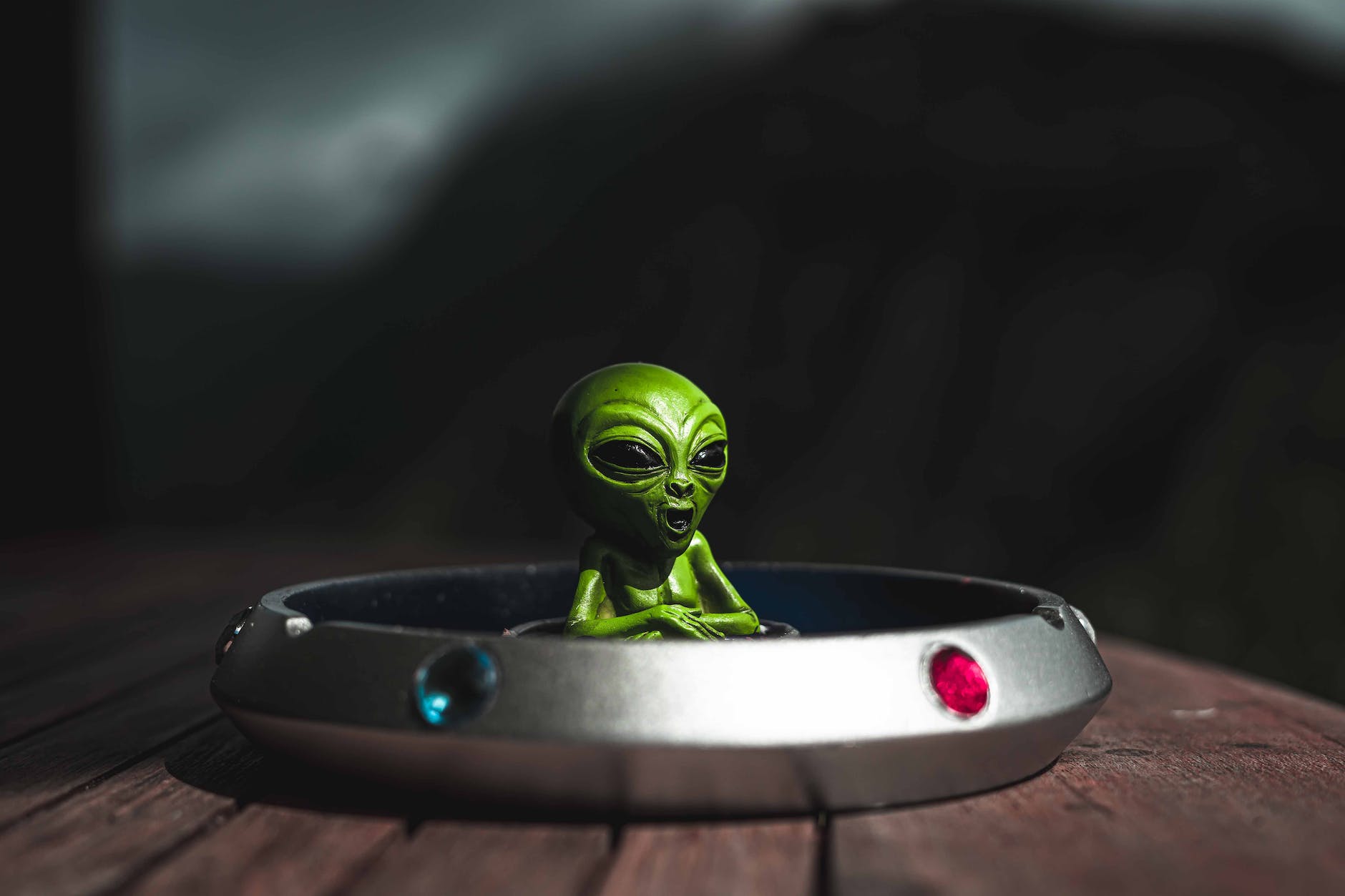
Here’s a word with Greek roots but it actually happens to be a very new and modern one: Greek xenos is ‘a stranger’, but what kinds of strangers is the science of ‘xenology’ supposed to study? Perhaps you’ve guessed it: the aliens from outer space. Or rather alien life, in whatever shape or form it may come. The word was first coined in the 1940s and has since gained some traction in science fiction literature.
Example sentence: She started believing in the UFOs and extraterrestrials after she had read the results of Mark’s xenological research project.
YEARNFUL
Another word on this list with a more wistful, nostalgic meaning. ‘To yearn’ means to desire, to long for something, typically sadly. The adjective was allegedly coined by the English poet John Keats, used in the sense of being full of mournful thoughts.
Example sentence: He is full of regrets, yearnful for the life he could have had.
ZOMBIE-LIKE
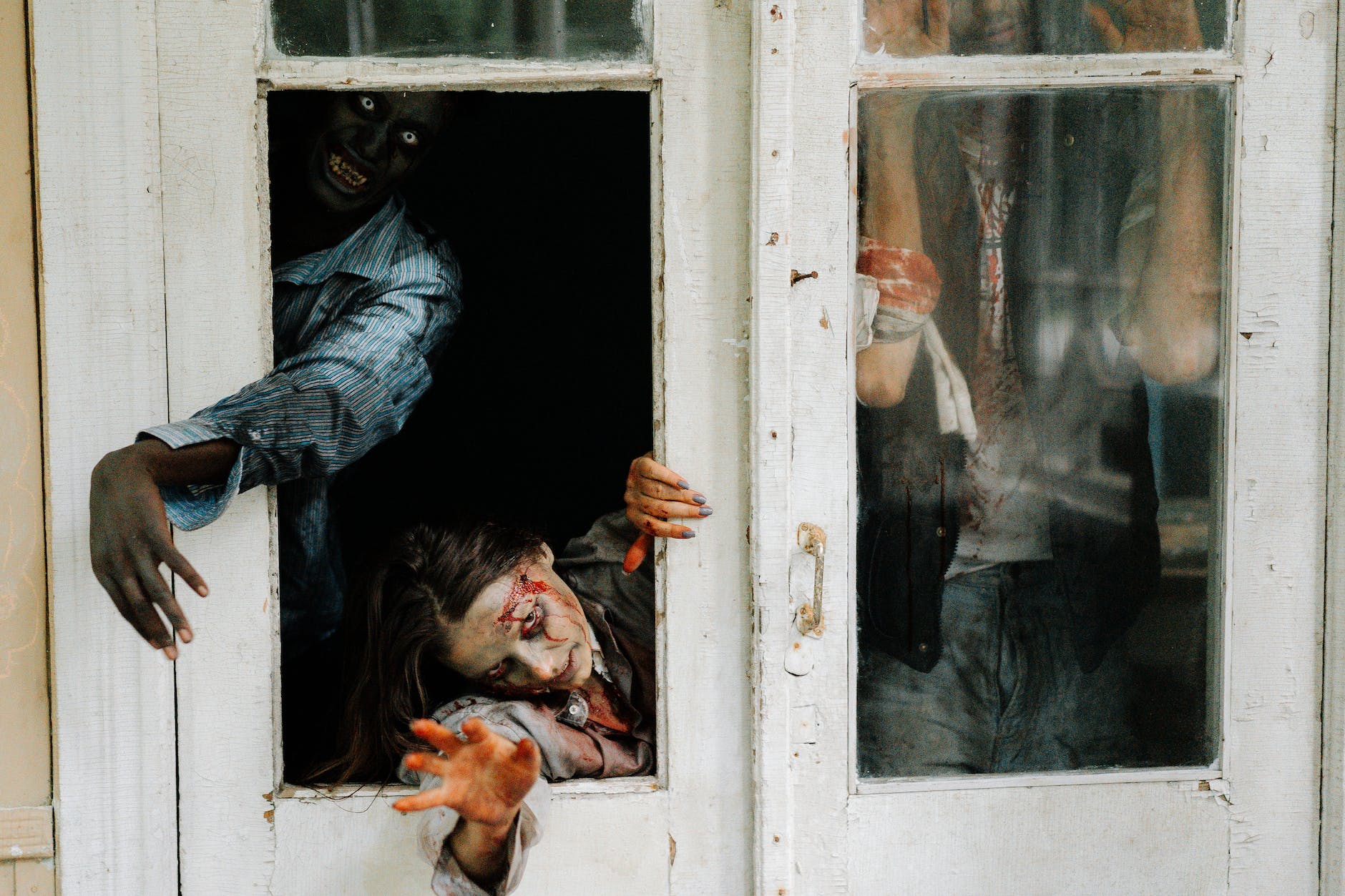
This one is pretty self-explanatory, but let’s see where the word ‘zombie’ comes from. The word is of Bantu origin, adopted into English from the Louisiana or Haitian Creole. In Voodoo beliefs, a zombie is a reanimated corpse, also known as ‘a revenant’. Apart from ‘looking like a zombie’, this adjective can be used for something unwanted that just keeps coming back and won’t go away.
Example sentence: James is on some new medication that’s making him zombie-like.
There are plenty more words we could put in this glossary, as English has a surprisingly rich and nuanced vocabulary in these and related lexical fields. Do you have any favourite words for things that are scary, weird or mysterious? Please share them in the comments section below!
Discover more from grammaticus
Subscribe to get the latest posts sent to your email.


What I’ve always loved about the word ‘sinister’ is the Latin for left handedness ‘sinistra utebatur’ which follows along with the idea that something on the left side is evil, bad or unlucky. My mother-in-law and my mother were left handed. My granddaughter is and I can use either hand. Love your blog. Thank you.
LikeLiked by 1 person
I’m also left-handed, and I actually once had a student who asked me whether I knew that left-handedness was of the devil (a theology student no less). It’s fascinating how some of these beliefs persist… Thank you so much for the comment!
LikeLike