
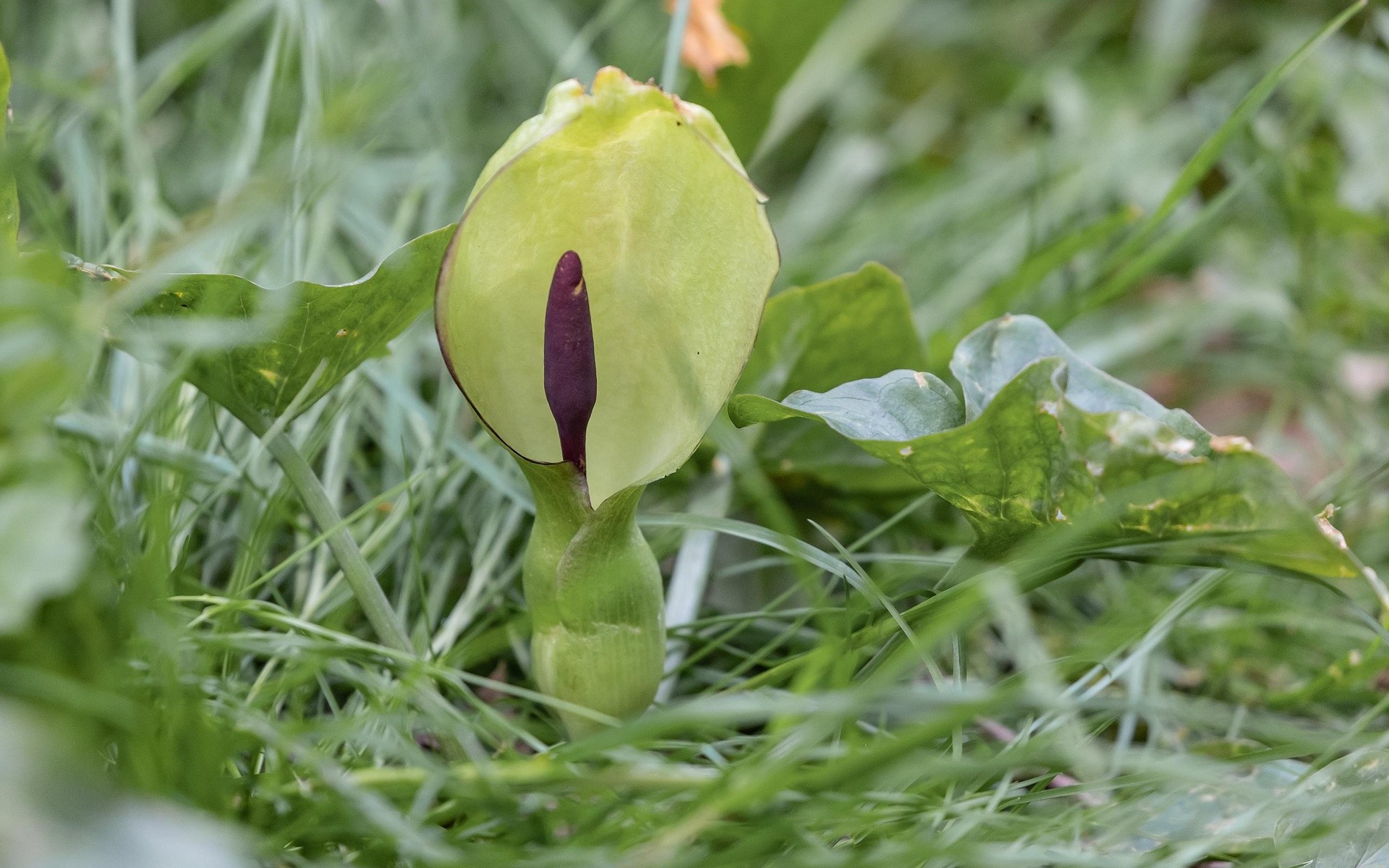
Last weekend I got to spend some lovely time in the Forest of Bojčin (Serb. Bojčinska šuma), about 40 km southwest of Belgrade. I often go there, but each time I visit, there’s something different to see. Classified as a swamp forest, it’s teeming with different species of insects, birds, fungi, and various plants. No wonder the area was declared a “protected natural monument” back in 1965.
What attracted my attention this time, apart from the inescapable swarms of mosquitoes, was this particular plant, growing everywhere along the paths.
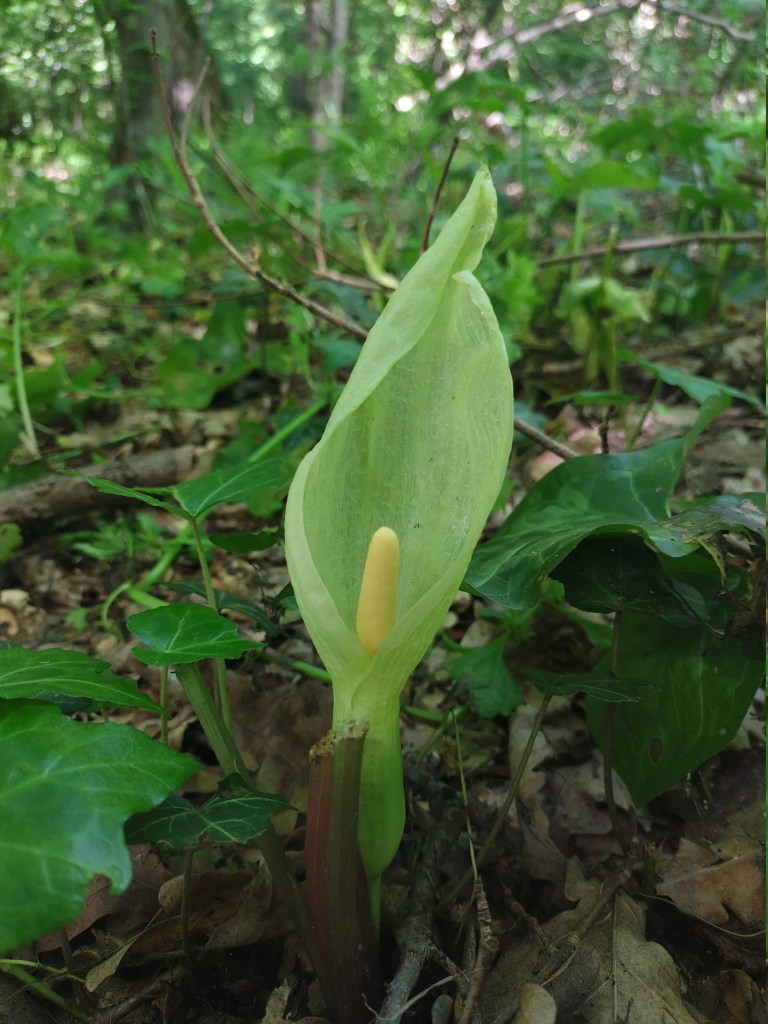
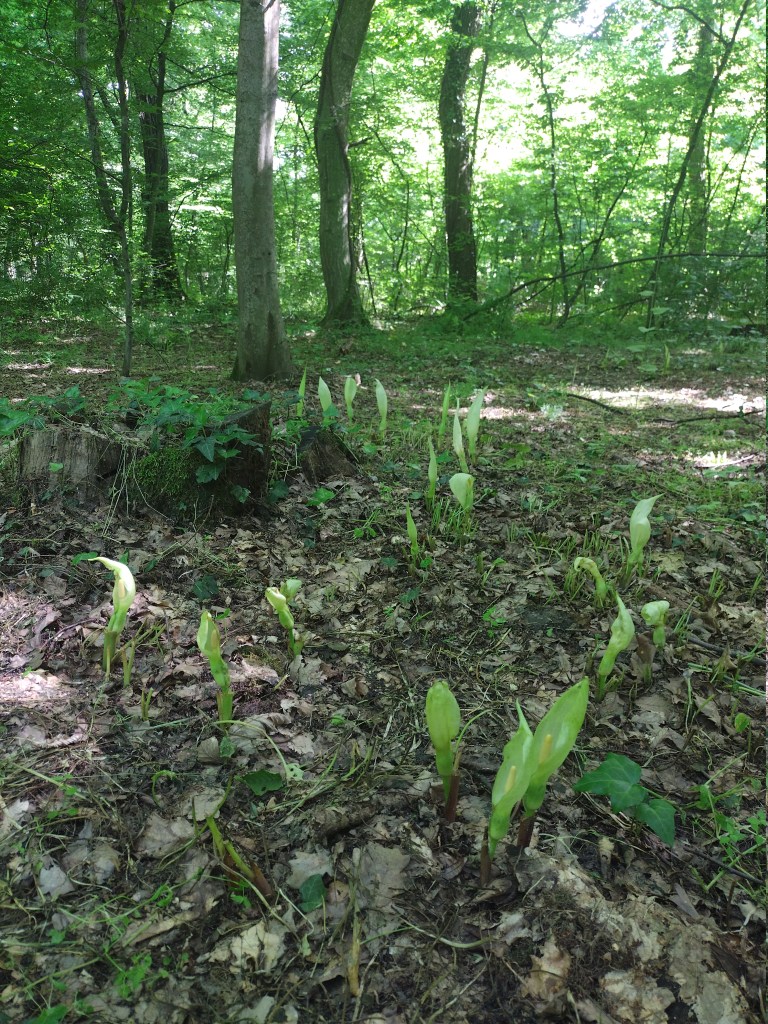
Sometimes there would be just a solitary plant, but sometimes a whole cluster, such as this one:
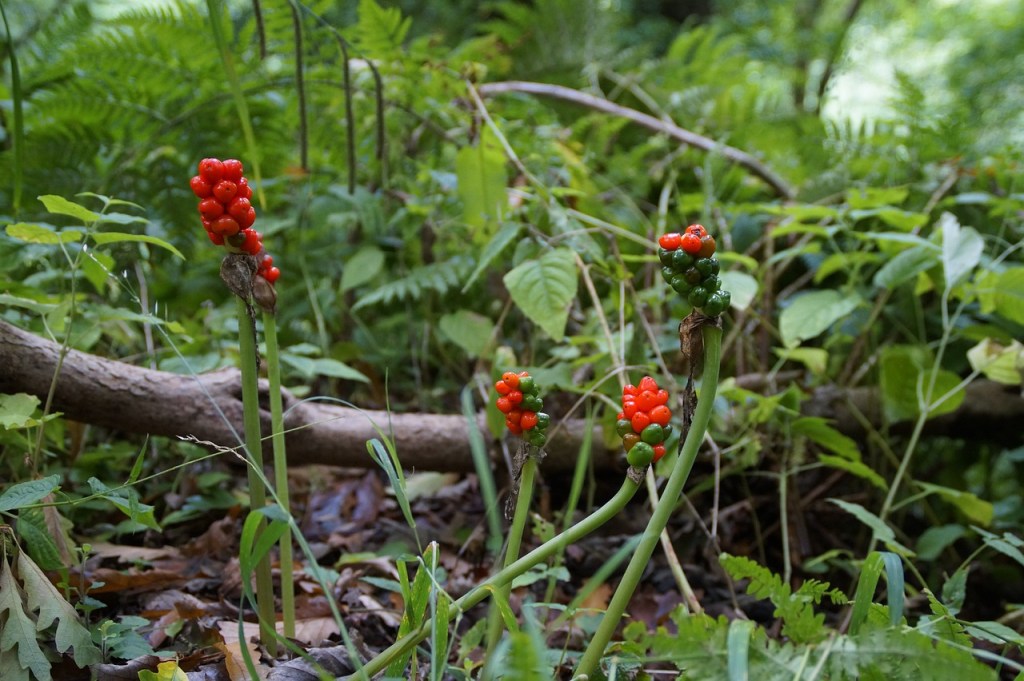
The following photo is not mine, but it shows its appearance at a later stage, typically seen in early autumn:
So, what is this plant?
Its official Latin name is Arum maculatum. It’s one of many different kinds of arums and it‘s native to most of Europe and adjacent regions. Beautiful as it is, all parts of it happen to be highly toxic, and can produce severe allergic reactions! In spite of it, it has been used in herbal medicine and even cooking. You can read more about its characteristics and potential uses in the links I’ve provided at the end of this post.
Apart from identifying an interesting plant, I always like to know its popular, common names, and in the English language this one has a lot of them – literally over a hundred! Some of the most common ones are:
- lords-and-ladies
- knights-and-ladies
- Adam and Eve
- devils and angels
- stallions and mares
- cuckoo pint
- jack in the pulpit
- starch-root
Starch-root is easily explainable just by following the literal meaning of the words: the root of this plant was used to make laundry starch. By extension, lords-and-ladies may have originated as an allusion to the starched ruffs worn by the – you’ve guess it – lords and ladies back in the Elizabethan times.

The more biblical and Christian names seem to be a thinly veiled allusions to the flower’s appearance, which sort of resembles the male and female genitalia (and this is probably the more likely origin for the lords-and-ladies term).
Interestingly, in German, and a number of languages influenced by it, this plant is known as Aronstab, literally Aaron’s rod (or staff) – which is another biblical reference, although of a less sexual nature (presumably).
Does this plant grow in the area where you live? What do people call it there, and does the name have any special meaning? Do share about it in the comments section below!
ADDITIONAL RESOURCES
Lords-and-ladies article from the BBC Gardeners’ World magazine
How Lords & Ladies Put Flies to Work
The unconventional flower parts of Lords-and-Ladies
VIDEO Lords and Ladies
NOTE

I’m a freelance language tutor (English, Latin, Classical Greek), researcher, and a literary scholar currently based in Belgrade, Serbia.
If you wish to receive new content from my blog – as soon as it’s published – please enter your email address in the subscribe box below.
To support my work, you can send me a donation via PayPal. It would be greatly appreciated!
COVER IMAGE CREDIT
Discover more from grammaticus
Subscribe to get the latest posts sent to your email.


Wouldn’t have known its name without reading your post, but “devils and angels” looks suitable when we think of its dual use – both for poison and cure. Many happy walks!
LikeLiked by 1 person