
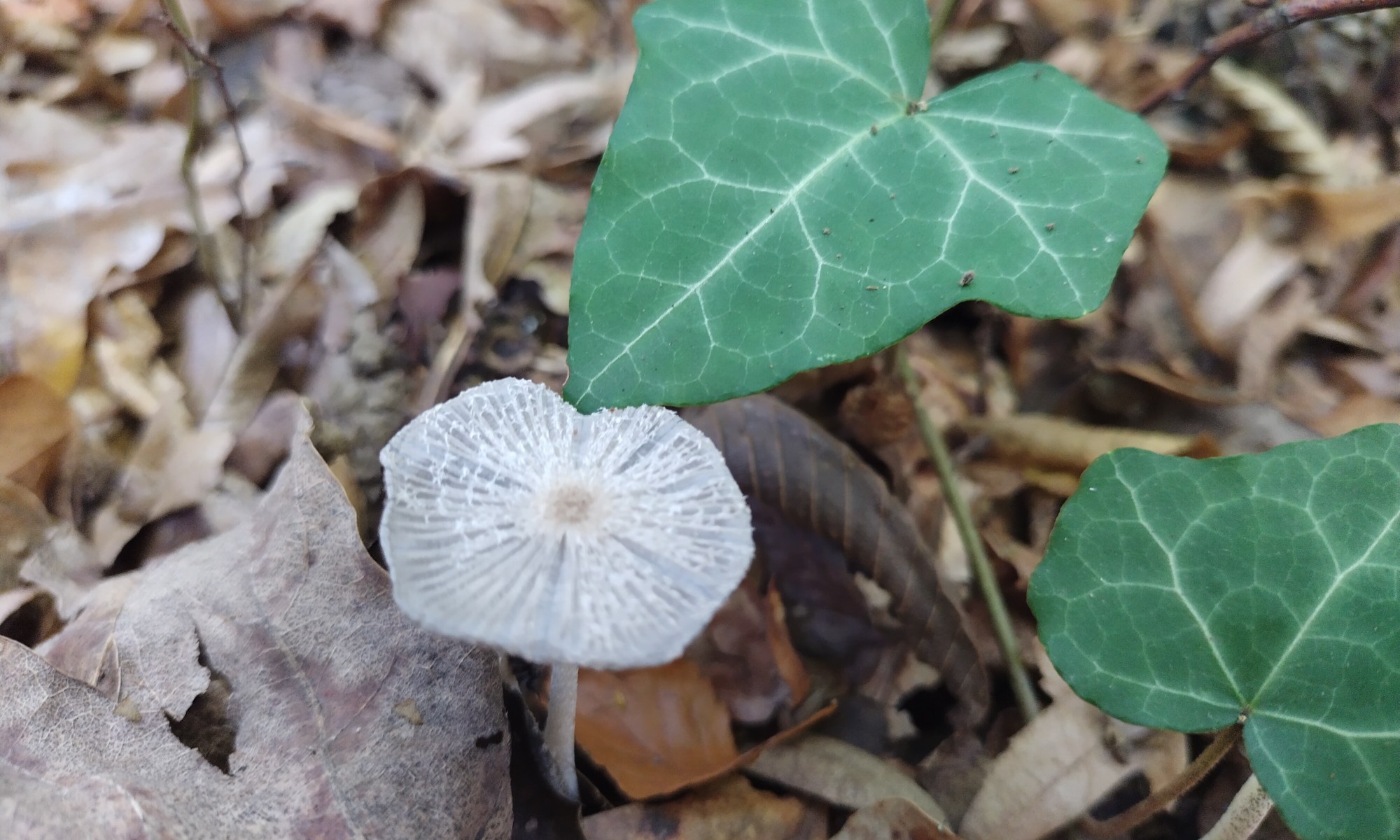
[The following post is primarily intended for English language learners, level B1 and above.]
If you’ve been following this blog or any of my social media accounts, you probably know how fascinated I am with the incredible world of mushrooms. I just love seeing them in nature, taking photos of them, reading about them… They are so weird and amazing!
In this blog post I’ll present some of the basic words you’ll need when describing mushrooms in English. You never know when they might come in handy. You’ll notice that all of them have other meanings, so you probably already know at least some of them from other contexts.
In this post I’ll be using photos made earlier this month on one of my walks through the Forest of Bojčin, some 30 km from Belgrade.
PARTS OF A MUSHROOM
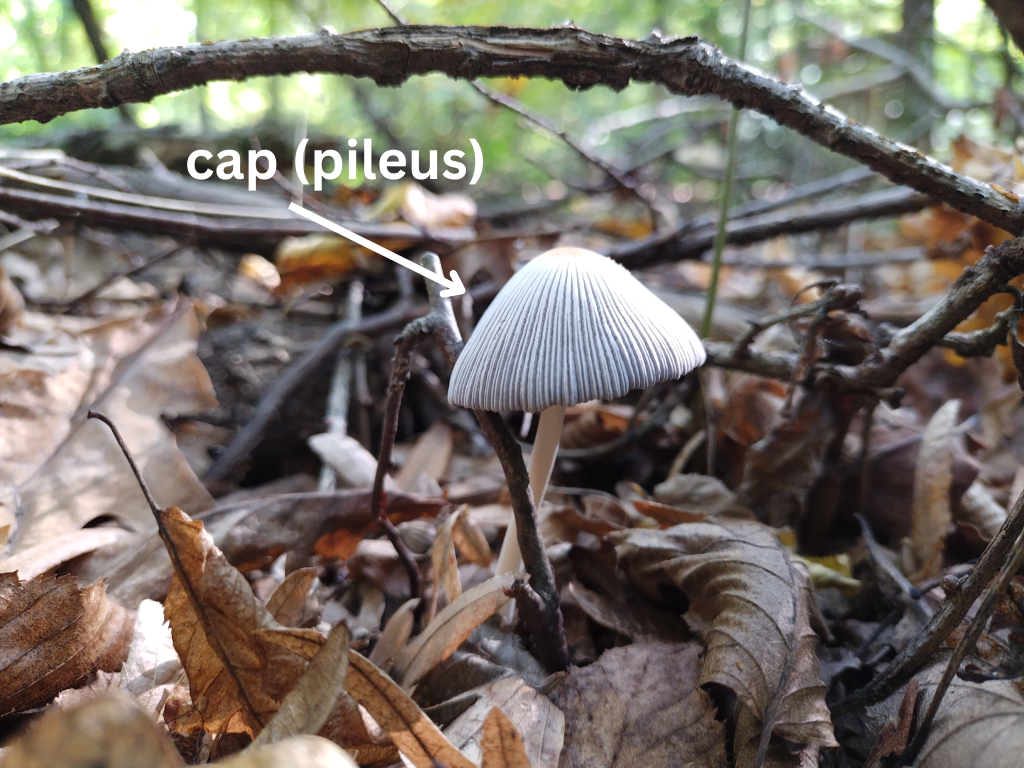
What you notice first when looking for mushrooms is their top, which often looks like an umbrella. This is a cap. The official mycological term is pileus, which is a Latin word for a type of cap worn in some parts of Europe in ancient and mediaeval times.
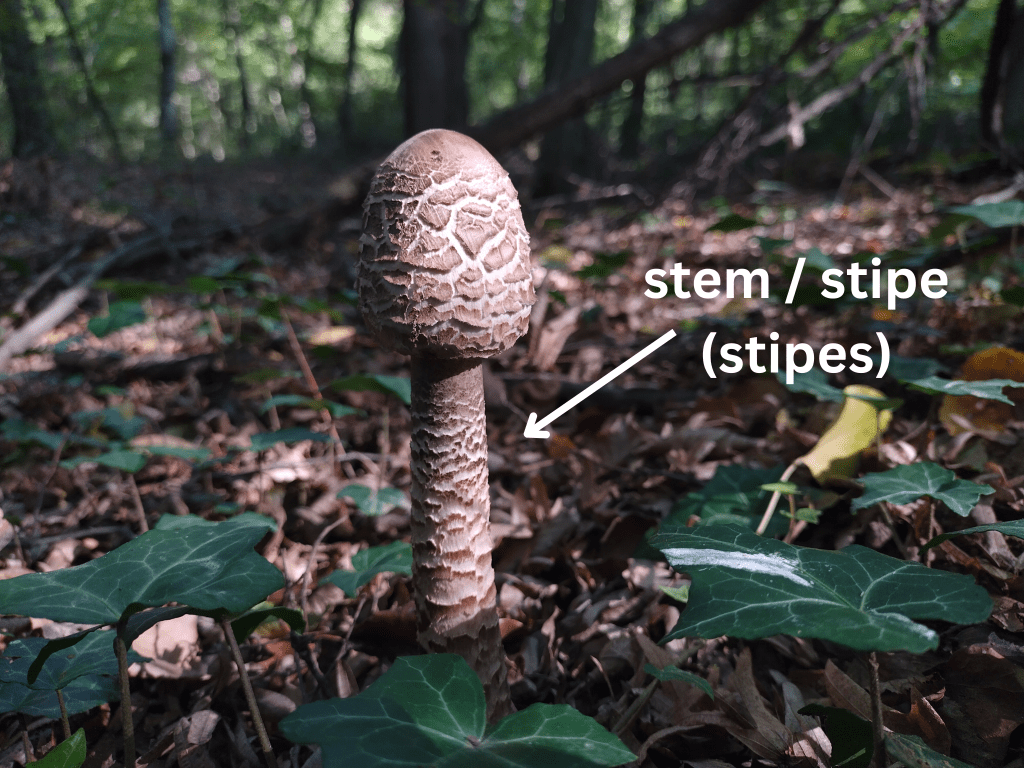
The stalk supporting the cap is called a stem or stipe. The latter word comes from the Latin stipes – a post, a trunk.
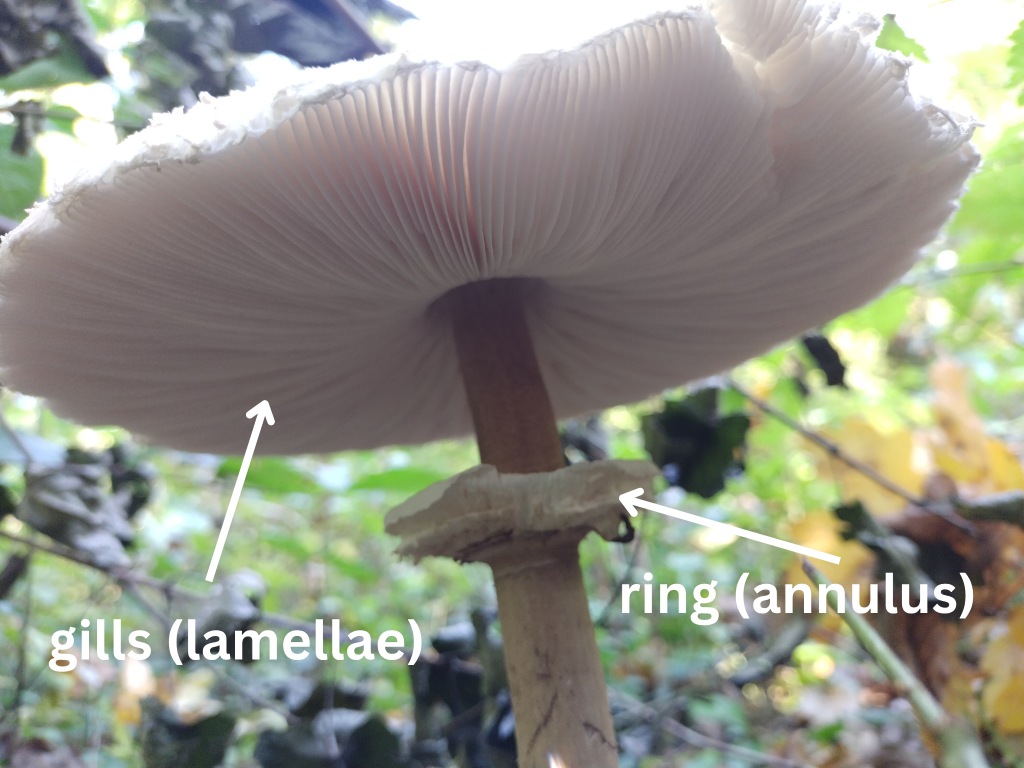
If you look at the underside of a mushroom, some of them have these elegant, almost geometrical structures known as gills. Fish also have gills, which allow them to breathe. In mushrooms, these gills serve to produce and distribute spores. The Latin term is lamella (pl. lamellae), which literally means “a thin plate.”
In the same photo you can see the ring, which is simply a translation of the Latin term annulus. As a mushroom grows, some of the tissue is left over on the stem. The presence of rings can help a lot when identifying mushrooms.
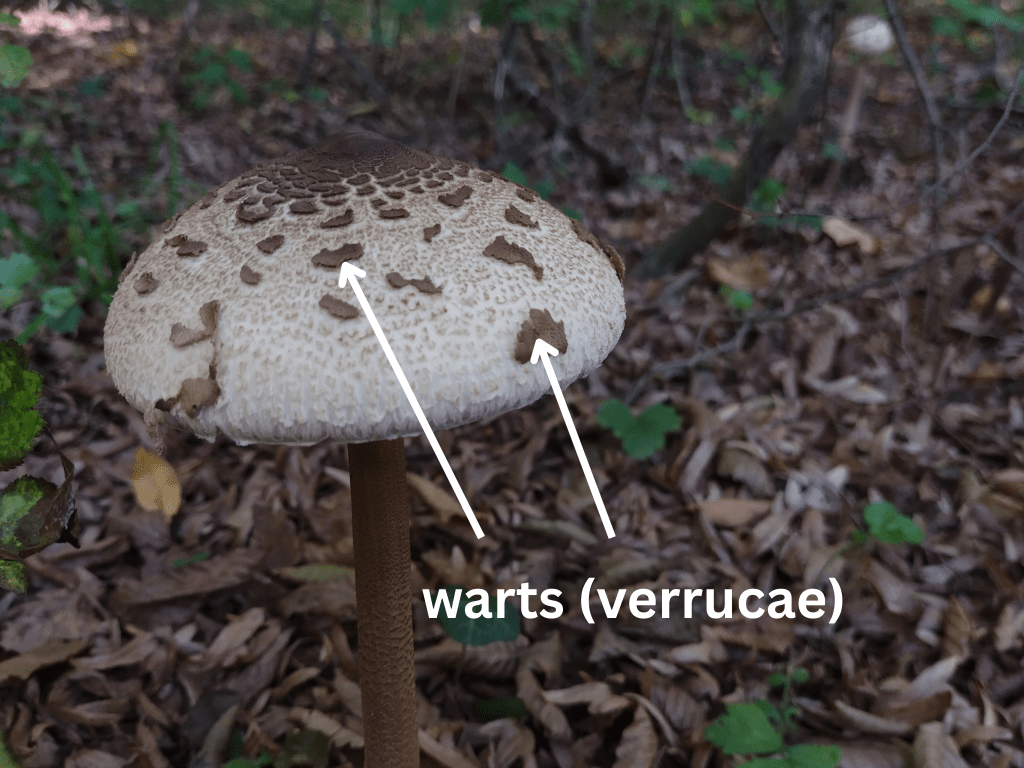
I used to have these on my fingers, and I hated them – warts! On humans and animals, warts are benign (but annoying) growths on the skin caused by certain viruses. On some mushrooms they look like scales or flakes. They are not an infection, but are the remnants of a structure that covered the mushroom when it was young (the so-called “universal veil”).
As you can imagine, there are many more words to describe mushrooms in much greater detail. To explore, have a look at the list of recommended resources at the end of this post.
SOME COMMON WORDS AND PHRASES
I never pick wild mushrooms by myself, because I’m never sure which ones are edible and which ones are poisonous.
- wild mushrooms grow in nature; the ones you can buy in a supermarket are cultivated mushrooms
- edible is an adjective meaning suitable or safe to eat; the opposite is inedible; another possible antonym is the adjective poisonous – those ones can easily kill you
Some mushrooms contain a powerful chemical substance that causes hallucinations. Such mushrooms are known as magic or psychedelic mushrooms or simply shrooms.
Mushrooms with healing properties are referred to as medicinal mushrooms.
DESCRIBING TASTE AND SMELL
I love adjectives that bring to mind the rich taste, aroma and texture of food. These ones you can also use when talking about mushrooms.
- woody: this one can refer to either taste, aroma or texture – or all three combined; when describing fungi and vegetables, it can refer to their tough texture which may be difficult to chew, or the taste similar to earthy – some people love it, others think it tastes like mud!
- earthy: deep taste or aroma often used to describe vegetables such as potatoes and beetroots
- nutty: tastes like nuts
- savoury: salty; also very tasty and flavourful
- delicate: has a light and subtle flavour
- fruity: has a sweet taste or smell, like fruits
- meaty: it has a lot of flesh, feels like meat
The following ones describe more unpleasant flavours or aromas:
- bitter: if you chew on a bitter mushroom, it’s typically a bad sign; this is a sharp taste that some people (myself included) actually like – think of black coffee or dark chocolate: yum!
- musty, mouldy (A.E. moldy): mould, in this case, is a nasty, dark type of fungus growing on wet surfaces, often in bathrooms or basements; you can use these adjectives to describe something with that unpleasant earthy taste and smell
- astringent: this is a very rich word that describes something that’s at the same time sharp, sour, bitter, and feels kind of dry; certain berries have that astringent taste, also many mushrooms
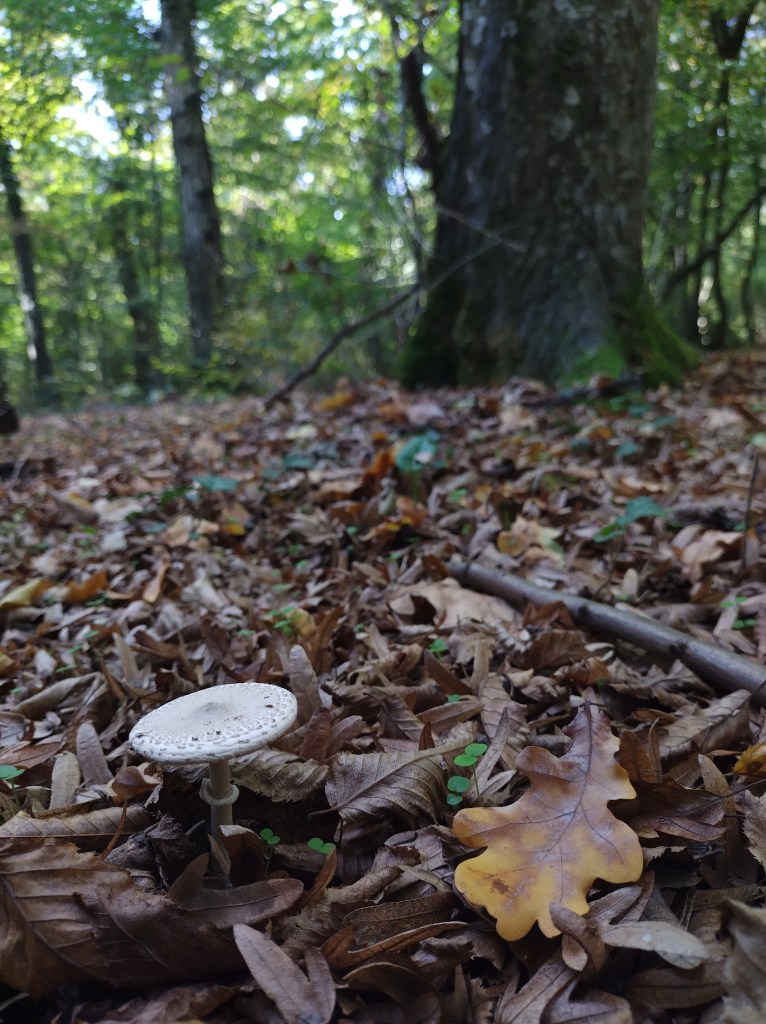
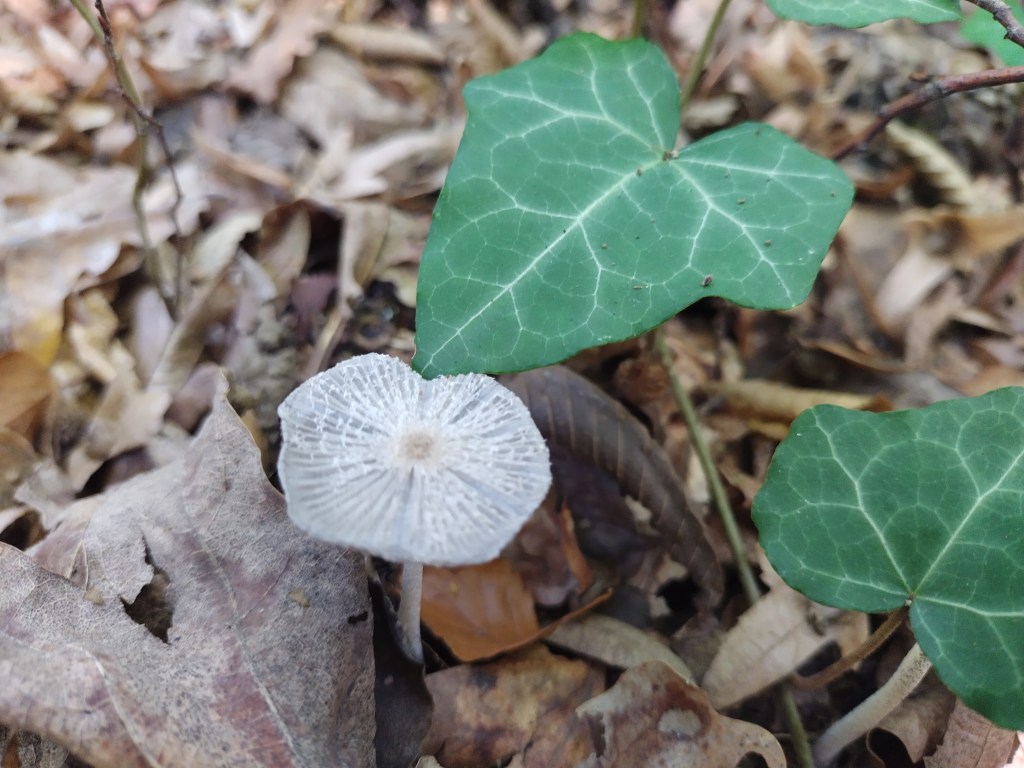
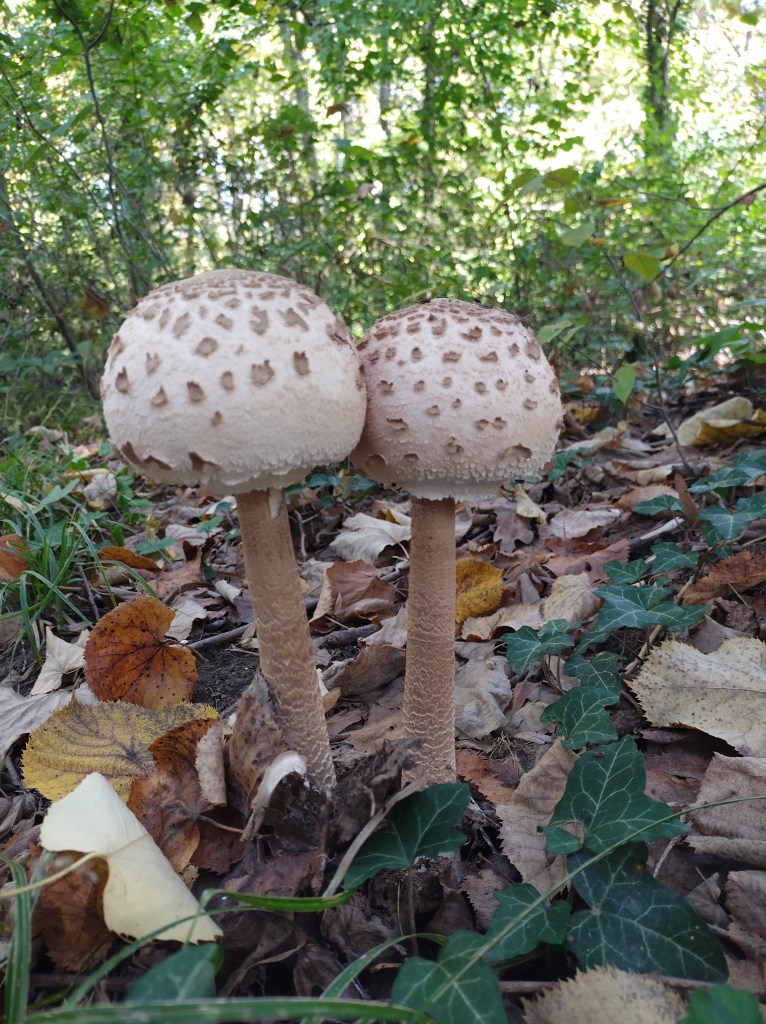
Here are some more of my lovely mushrooms. For homework, choose one of them, write a brief description, and post it in the comments section! I’ll be happy to read and check your writing!

ADDITIONAL RESOURCES
Mushroom Anatomy: A Deep Dive Into the Parts of a Mushroom
The Parts of a Mushroom – online vocabulary quiz
NOTES
If you wish to receive new content from the Grammaticus blog in your inbox, please enter your email address in the box below. You can also subscribe to my free monthly Newsletter.
To support my work, you can send me a donation via PayPal. It would be greatly appreciated!
Discover more from grammaticus
Subscribe to get the latest posts sent to your email.
 grammaticus