

You know that game in which players have to use their memory to find pairs of matching cards? Of course you do!
Used extensively in language teaching, it’s commonly referred to as “pelmanism.” I first heard that term many years ago at a teacher development workshop; assuming it was just a fancy word for a memory game (which is exactly what it is), at the time I didn’t pay much attention to it. But it did sound sort of intriguing: why pelmanism?
Flicking through an old magazine from the 1940s the other day, I came across the following advertisement, which set me off on a journey down the proverbial rabbit hole:

If you can’t see the image above, the gist of it is that there was this organisation by the name of Pelman Institute, advertising the Pelman Course and the accompanying book “The Science of Success.” A course in Pelmanism (with a capital P) “brings out the mind’s latent powers and develops them to the highest point of efficiency.”
There are other wonderful promises in the ad: “Pelmanism banishes such weaknesses as Mind-Wandering, Inferiority, Indecision, which interfere with the effective working powers of the mind, and in their place develops vital qualities such as Optimism, Concentration and Reliability, all qualities of the utmost value in any walk of life.” All that through playing memory games?
As it turns out, there was a lot more to it. Pelman Institute was originally founded by William Joseph Ennever in the late 1890s, at the time of the growing popularity of correspondence courses. Ennever marketed a self-improvement system that included elements of practical philosophy, popular psychology, and memory training. By the early 1900s, the system gained hundreds of thousands of students all over the world, and the business was booming.
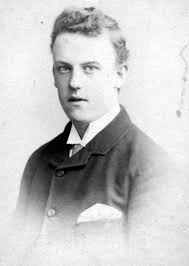
The initial Pelman course turned into Pelman Schools, which evolved into the Pelman Institute company in the 1920s. However, Ennever’s personal involvement with these later business ventures was sporadic, and his financial situation became precarious. At one point he went bankrupt and that was the end of his role at the Institute.
It’s ironic that there’s very little information available on the man who dedicated his life to developing a memory training technique. I haven’t been able to find even his date of death. More surprisingly, the fate of “Pelman” is even more of a mystery, as his very identity remains unclear: according to some sources, a certain Christopher Louis Pelman was one of Ennever’s early business partners; according to others, it was the name Ennever used as a pseudonym, referring to himself as “Mr Pelman.”
In any case, Pelman Institute is long gone, probably folding like countless other self-help correspondence courses. But curiously, the word “pelmanism” has survived: a lone relic of a once hugely successful self-improvement business.
RECOMMENDED READING
The Man with Half a Million Followers
This column will change your life: has Pelmanism’s time come at last?
NOTES
This post is available for download in the PDF format.
If you wish to receive new content from the Grammaticus blog, please enter your email address in the box below. You can also subscribe to my Newsletter and receive all the new posts once a month in your inbox.
IMAGE CREDIT
Nicola Barts via Pexels
Discover more from grammaticus
Subscribe to get the latest posts sent to your email.
 grammaticus
Funny how much time people had back then to read an advert. Things hadn’t change much in the 1970s either: grasshopper minds apparently kept focused on reading (often questionable) advertisements for minutes!
😉
LikeLiked by 1 person
Haha you’re right, all these adverts are very long! I must have a grasshopper mind too, as I enjoy reading them 😀
LikeLiked by 1 person