
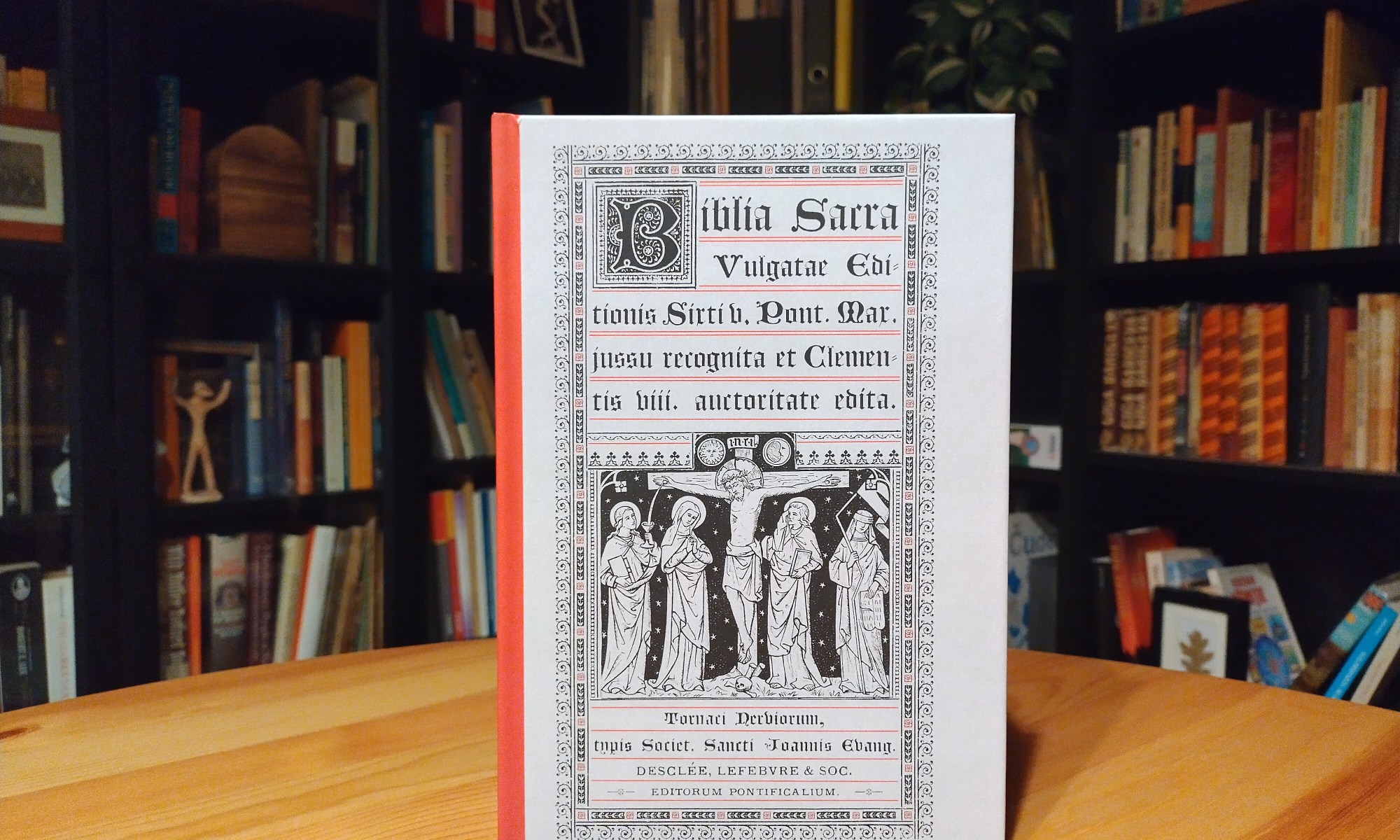
The Vulgate, i.e. the Vulgata, is the Latin language translation of the Bible going back to St Jerome (c. 342-420). A work of exquisite importance for the history of Christianity and the dissemination of the Bible, it still remains in official use albeit in a revised version known as Nova Vulgata.

The version reviewed in this post, however, is a wonderful reprint of the so-called Sixto-Clementine Vulgate, in use between 1592 and 1979 – which is to say, it’s the last official version of the Vulgate before the changes introduced in the 1970s. (For more information on the textual differences between these different versions of the Vulgate, please click here.) The source text of this reprint is the 1901 edition published by Henri and Jules Desclee of the Society of St John the Evangelist in Tournai, Belgium.
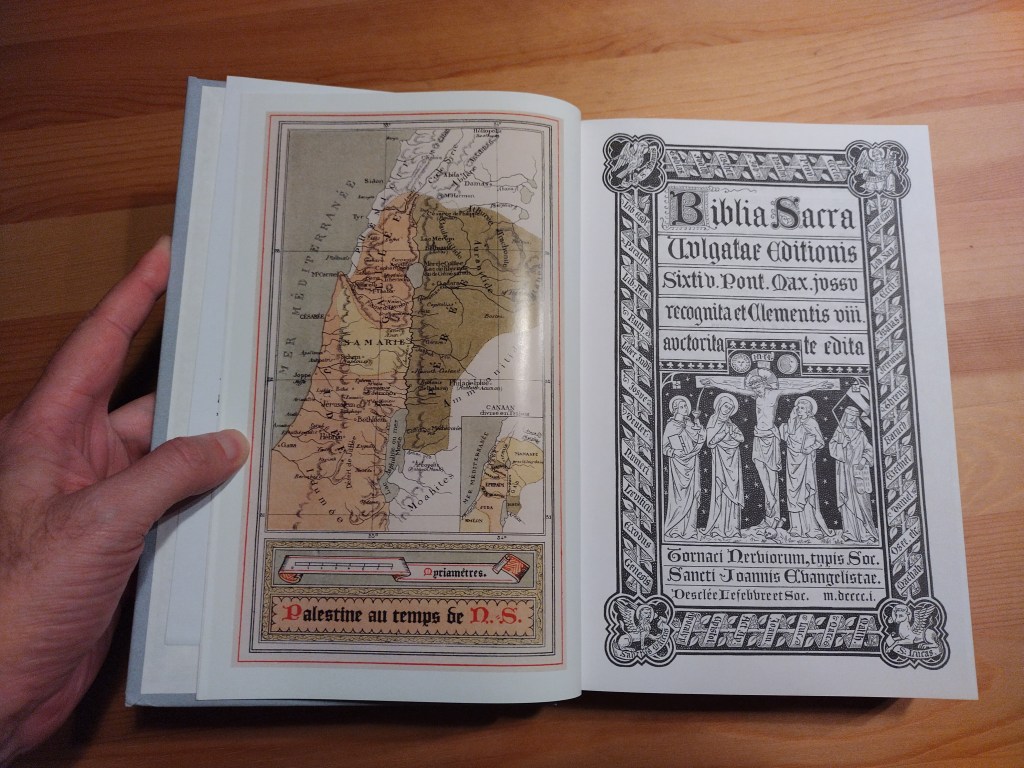
I was initially attracted to this edition by the lovely typography and illustrations, deliberately designed to look archaic, almost mediaeval. Reprints can sometimes go wrong, with portions of the text barely legible, but that is definitely not the case here. Whatever technique was used, this is a perfect facsimile; there is no ghosting, and after several months of daily use, I can say that the binding and the covers are very sturdy, as well.
Apart from the Latin text of the Bible (which, this being a Catholic Bible, includes the deuterocanonical books), there are several historical maps, printed on higher-quality, glossy paper, as well as a lengthy Praefatio (preface) by St Jerome.
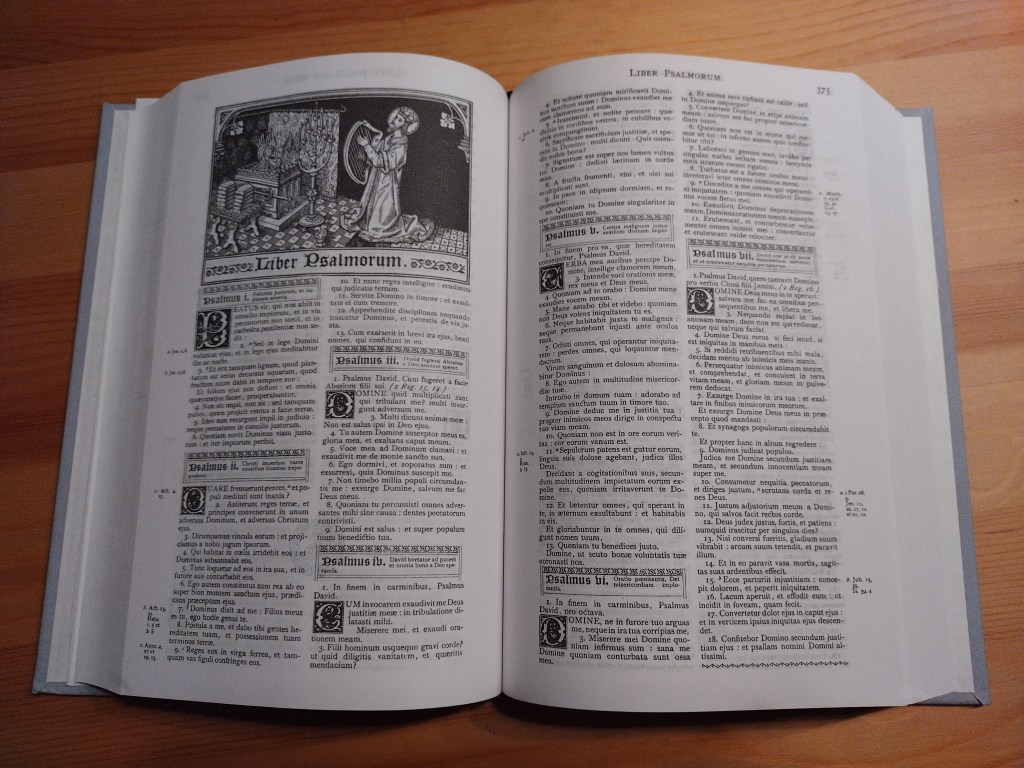
My only negative remark is that I expected the font to be a bit bigger given the format of the book (16 x 23.5 cm, 5 cm thick). It turned out to be ever so slightly larger than that of my old pocket-size copy of the Vulgate which I had to stop using because I had major difficulty following the text. Having said that, this version is so beautiful that I intend to keep using it, even if it meant getting a magnifying glass!
That minor font issue (no pun intended) aside, this volume gets 5 stars out of 5 from me. If you want more information on it or to find out how to order your copy, visit the publisher’s website: Church Latin Publishing LLC.
Discover more from grammaticus
Subscribe to get the latest posts sent to your email.
 grammaticus