
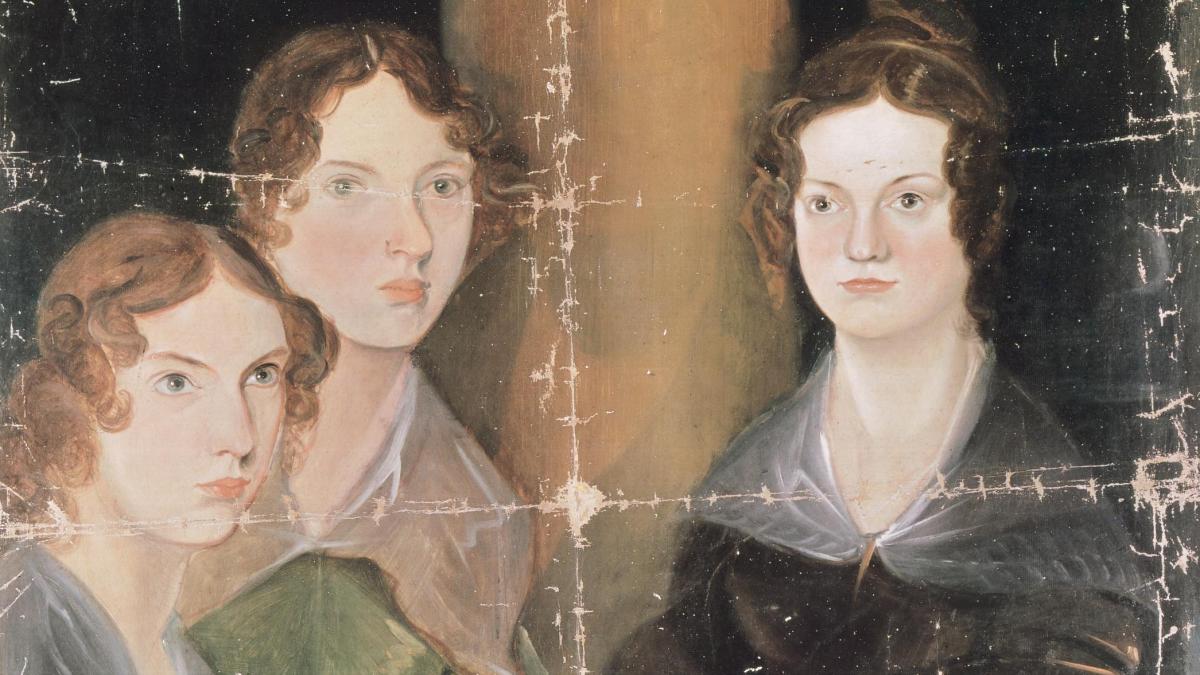
Anne was the youngest of the three celebrated Brontë sisters. Born in 1820, she spent most of her life living with her immediate family in Haworth, Yorkshire. Sadly, she died when she was only 29, probably of tuberculosis.
Publishing her works under the pseudonym of Acton Bell, her first novel was Agnes Grey, which came out in 1847. It’s a largely autobiographical account of the life of a governess tutoring the impossibly spoiled children of the wealthy English landed gentry, but the book explores other themes, as well.
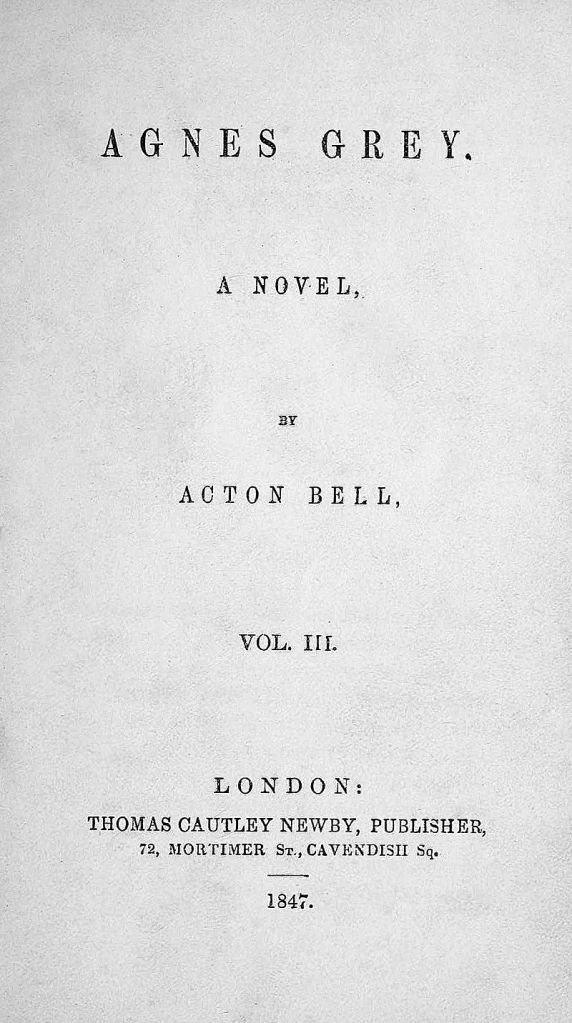
Agnes Grey was quite a popular title during Anne’s lifetime, less so in subsequent decades as it was perceived as too moralising. More recent critiques have been more favourable, pointing at Anne’s progressive take on a range of issues, from her treatment of social class differences to cruelty to animals.
Instead of writing a proper book review, in this post I will share a few memorable quotes from this lovely novel that have stayed with me after I’d recently read it for the first time. They might give you some idea of Anne Brontë’s writing style and her views on things.
HEART
“The human heart is like india-rubber; a little swells it, but a great deal will not burst it. If “little more than nothing will disturb it, little less than all things will suffice” to break it. As in the outer members of our frame, there is a vital power inherent in itself that strengthens it against external violence. Every blow that shakes it will serve to harden it against a future stroke; as constant labour thickens the skin of the hand, and strengthens its muscles instead of wasting them away: so that a day of arduous toil, that might excoriate a lady’s palm, would make no sensible impression on that of a hardy ploughman.”
ASSOCIATIONS
“Habitual associates are known to exercise a great influence over each other’s minds and manners. Those whose actions are for ever before our eyes, whose words are ever in our ears, will naturally lead us, albeit against our will—slowly—gradually—imperceptibly, perhaps, to act and speak as they do. I will not presume to say how far this irresistible power of assimilation extends; but if one civilized man were doomed to pass a dozen years amid a race of intractable savages, unless he had power to improve them, I greatly question whether, at the close of that period, he would not have become, at least, a barbarian himself.”
BEAUTY
“They that have beauty, let them be thankful for it, and make a good use of it, like any other talent: they that have it not, let them console themselves, and do the best they can without it—certainly, though liable to be over-estimated, it is a gift of God, and not to be despised. Many will feel this, who have felt that they could love, and whose hearts tell them that they are worthy to be loved again, while yet they are debarred, by the lack of this or some such seeming trifle, from giving and receiving that happiness they seem almost made to feel and to impart. As well might the humble glow-worm despise that power of giving light, without which, the roving fly might pass her and repass her a thousand times, and never rest beside her; she might hear her winged darling buzzing over and around her: he vainly seeking her, she longing to be found, but with no power to make her presence known, no voice to call him, no wings to follow his flights… the fly must seek another mate, the worm must live and die alone.”
POETRY
“When we are harassed by sorrow or anxieties, or long oppressed by any powerful feelings which we must keep to ourselves, for which we can obtain and seek no sympathy from any living creature, and which, yet, we cannot, or will not wholly crush, we often, naturally, seek relief in poetry—and often find it too—whether in the effusions of others, which seem to harmonize with our existing case, or in our own attempts to give utterance to those thoughts and feelings in strains less musical, perchance, but more appropriate, and therefore more penetrating and sympathetic, and, for the time, more soothing, or more powerful to rouse and to unburden the oppressed and swollen heart.”
LABOUR
“We often pity the poor, because they have no leisure to mourn their departed relatives, and necessity obliges them to labour through their severest afflictions: but is not active employment the best remedy for overwhelming sorrow… the surest antidote for despair? It may be a rough comforter: it may seem hard to be harassed with the cares of life when we have no relish for its enjoyments, to be goaded to labour when the heart is ready to break, and the vexed spirit implores for rest only to weep in silence; but is not labour better than the rest we covet? and are not those petty, tormenting cares less hurtful than a continual brooding over the great affliction that oppresses us? Besides, we cannot have cares, and anxieties, and toil, without hope—if it be but the hope of fulfilling our joyless task, accomplishing some needful project, or escaping some further annoyance.”
Reading Agnes Grey was a very pleasurable experience and I can definitely recommend this novel. You can download the free ebook in various formats from the Internet Archive. If you have access to a Kindle device or the Kindle app, you can also get a free copy from Amazon.
NOTES
If you wish to receive new content from the Grammaticus blog in your inbox, please enter your email address in the box below. You can also subscribe to my free monthly Newsletter.
To support my work, you can send me a donation via PayPal. It would be greatly appreciated!
Discover more from grammaticus
Subscribe to get the latest posts sent to your email.
 grammaticus