

In this post we’ll get to learn a couple of key words connected with the major Christian holiday of Easter, as well as the days preceding it. Some of them have a really interesting origin, so we’ll also take a quick look at their etymology and cultural background.
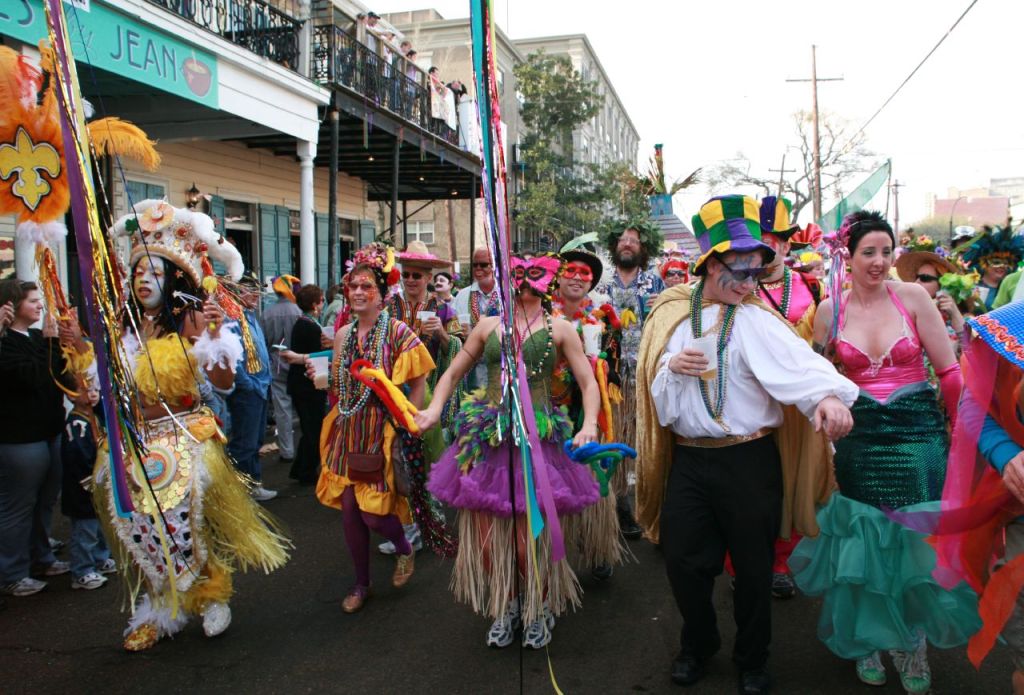
Chronologically, the first of these days is Shrove Tuesday. This is the day before the beginning of a six-week period of fasting known as Lent. In some places it’s also commonly referred to by its French name, Mardi Gras (‘Fat Tuesday’), and in many English-speaking countries it’s colloquially known as Pancake Day. Traditionally, this is the day for drinking and partying, participating in carnivals, and enjoying rich meals (hence ‘Fat Tuesday’). And why all that? Because the following forty days are meant to be a period of fasting and general abstaining from anything seen as immodest or luxurious. This also explains why pancakes feature prominently (at least in the customs of the British Isles): the basic ingredients used to make them are eggs, milk and sugar. In principle, you are not supposed to consume any of those during Lent, so Shrove Tuesday is your last chance to enjoy something rich and sweet! The word ‘Shrove’ comes from the verb shrive, which is an old English word meaning ‘to seek forgiveness’ – in this case from a priest at confession. Not many people do that nowadays, but the word remains.
The day after Shrove Tuesday is the actual beginning of Lent. It’s known as Ash Wednesday, because, traditionally, on that day Christian believers attend special church services during which ashes are placed on their foreheads, typically in the shape of a cross. This is meant to be a reminder of the Old Testament verse “Remember, man, that thou art dust, and to dust thou shalt return.” It also signals the beginning of one’s Lenten “sacrifice”: people will typically choose something to abstain from for the following forty days, which might be anything from giving up chocolate, meat, alcohol, not watching too much TV, to making more serious commitments.

Now we can fast forward to Holy Week, which is the final week of Lent. Four days are of special significance here, at least for those who are believers and church attenders. The first one is known as Palm Sunday. This is the Sunday before Easter, and it commemorates Jesus’ entry into Jerusalem, as described in some of the Gospels. In some churches, on that day people walk in processions carrying small palm crosses to recreate the event.

The second important day of the Holy Week is the Thursday before Easter, known as Maundy Thursday. The word ‘Maundy’ comes from the Latin word mandatum – a commandment. On this day, Christian believers are reminded of Jesus’ instruction given at the last supper: “A new commandment I give unto you: That you love one another, as I have loved you, that you also love one another.” In more traditional churches, there will also be a ritual of foot washing, in remembrance of Jesus humbly washing the feet of his disciples on that same occasion.

After that comes Good Friday, which is probably the saddest day in the Christian liturgical calendar. It commemorates the crucifixion of Jesus, as related in the New Testament. Don’t be confused about the word ‘Good’ here; the name comes from an old use of the adjective ‘good’ which meant ‘holy’; you’ll also see this in the use of ‘The Good Book’ when referring to the Bible, etc. Holy Saturday follows, which is the time for Easter vigil – a nighttime church service commemorating Jesus’ tragic death on the cross.
And now we finally get to Easter Sunday. In stark contrast to the previous three days of the Holy Week, which were all commemorating sad and tragic events in the mythical story of Jesus, Easter Sunday is a time of celebration. According to Christian beliefs, Jesus’ body resurrected and couldn’t be found in the tomb in which he’d been buried – the crown proof of his divinity and victory over death. For many, though, Easter is mainly about eating lots and lots of chocolates!

What does the word ‘Easter’ actually mean? You might be surprised to learn that its etymology doesn’t have much to do with Jesus or Christianity, at all. The word comes from the name of the Germanic goddess Eostre or Ostara who was celebrated at the beginning of spring (also recognisable in the German word for Easter – Ostern). Many of the customs and symbols connected with this holiday also originate in the pre-Christian times, where they were part of the springtime fertility rites: decorating Easter eggs, the imagery of the Easter bunny, making hot cross buns, etc.
Does that mean that Easter is actually a pagan holiday? Not really. As we can see with many other customs and traditions all around Europe, elements of Christianity were added to the existing pagan belief system over a long period of time, resulting in a curious mixture of Christian doctrine and pre-Christian lore. In the case of Easter, that wasn’t very difficult given the shared symbolism of rebirth and renewal: the symbols remained long after the wider religious culture changed. Today this holiday – like many others – is whatever you make of it!

There are a great many customs connected with Easter. How is it celebrated in your country or region? Or do you have springtime holidays other than Easter? Share with us in the comments section below!
Discover more from grammaticus
Subscribe to get the latest posts sent to your email.
 grammaticus